

Introduction
In the previous article titled The Creation of the Soul and Its Journey, I presented that our knowledge regarding this matter is very limited, and even the Prophet Muhammad (PBUH) mentioned the same in his hadith. | Article: The Creation of the Soul & Its Journey
One important point to note is that the concept of the soul is not unique to Islam alone; in fact, this concept exists in many cultures and other religions with varying understandings, and it has existed since ancient civilizations.
It is essential for us to understand this concept so that we can differentiate between the concept of the soul that aligns with Islam and the one found in other religions.
So in this episode, we will discuss the concept of the soul and other related elements that form consciousness. This is the true reality of human creation.
Consciousness from a Scientific Perspective

Consciousness, a profound phenomenon that is difficult to understand, continues to intrigue scientists and philosophers. A failed experiment was conducted by Duncan MacDougall in 1907. [14]
This experiment, called the “21 Grams Experiment,” involved weighing a dying patient, then re-weighing the patient after death, with the reading showing a difference in mass of 21 grams.
Duncan tried to prove that the “soul” has weight. The experiment is said to have failed due to the many controversies surrounding it and other issues that arose during the experiment. Had this experiment been recognized, Duncan would not only have achieved his hypothesis but also proven that there is an entity that leaves the body when a person dies.
On another note, Bernard J. Baars provided an interesting explanation of consciousness in his book titled In the Theater of Consciousness: The Workspace of the Mind. In this book, Baars states that consciousness is like a theater stage. [2]
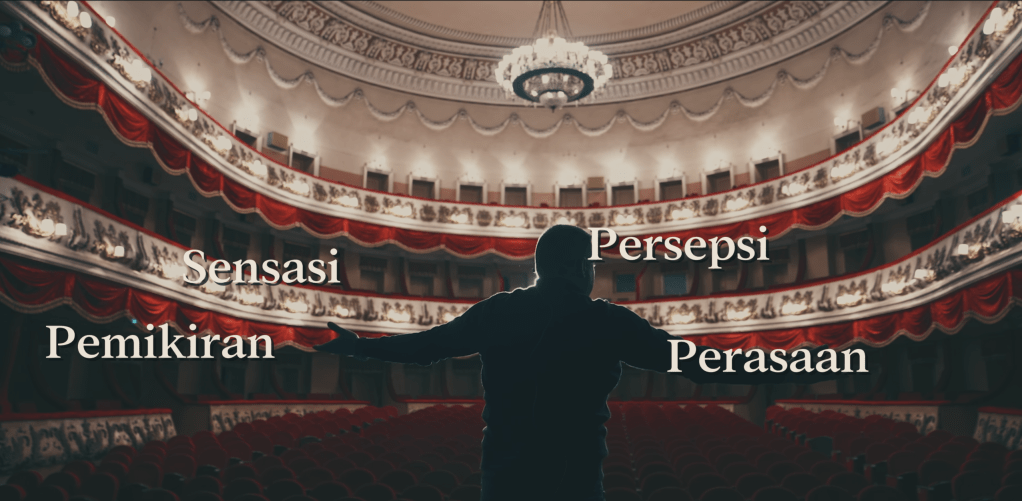
I will summarize his argument later, but let’s first understand the concept he is trying to present. According to him, consciousness takes the main role on this stage and acts as thought, sensation, perception, and feeling.
The audience for the theater performance enacted by consciousness is the subconscious mind. The subconscious mind acts as a silent operator that makes implicit predictions, self-systems, creates context for conscious experiences, and guides our responses.

Baars also claims to have strong evidence that consciousness originates from a biological mechanism that evolved from early humans and has continued to develop over time. Ultimately, it forms a consciousness influenced by survival needs and complex social interactions that require the ability to process information in a more advanced and flexible way.
In short, Baars argues that consciousness is a biological process in the brain that evolved from ancient societies and continues to develop to meet survival needs, assisted by the subconscious mind that provides context for things and helps us respond appropriately to situations. [3]
In many studies and debates within the field of science, consciousness is not seen as a soul or entity separate from the body, but as the result of the evolutionary biological and neurobiological processes in the brain.
From a scientific standpoint, this field still cannot explain why some patients lose part of their brain yet remain conscious, emotional, and able to respond reflexively, as in the case of Phineas Gage. [15]
Science also cannot explain why some patients’ “vital” organs continue to function, yet they remain in a coma for an extended period, as in the case of Elaine Esposito. [16]

The Concept of Roh

In Islam, “consciousness,” or the life of something, is closely linked with the soul. When talking about the soul, its connection to God is unavoidable. For us believers who believe that everything is created by Allah, the soul is certainly a creation of His.
Glory be to Allah, the Most Great, He is Al-Khaliq, Al-Muhyi, distinct and separate from any similarity or likeness to any creature in the universe, whether on earth or in the heavens.
However, for religions that worship idols or are also known as paganism, they believe that the soul is part of the essence of God. According to Ahmad Iqram in his book Tersesat: Kebatilan Gerakan New Age, based on pagan beliefs, the soul is a small fragment of a single entity known as the central soul. [1]
Then, after a while, this unified central soul suddenly splits and forms smaller souls that overflow and become gods. These small souls that become gods then create all objects with fragments of these smaller souls.
Therefore, since everything in the universe is a fragment of God that also originates from the central soul, everything is also considered God or a part of God because there is the essence of God or the soul of God in every object, star, plant, or animal in this universe.
It is based on this belief that pagan followers worship stars, trees, animals, or even stones. In fact, some humans are also worshipped as gods or incarnations of gods because these humans have supposedly reached a level of consciousness where their true self is believed to be a fragment of God’s essence.
The concept of the essence of God within creatures closely resembles the concept in pagan religions. Because of this, followers of Judaism and some Christian sects strongly oppose mainstream Christian doctrine and view them as idol worshipers. According to the doctrine in this religion, Jesus (Peace Be Upon Him) is considered “the essence from God.” [13]
The Concepts of Soul, Nafs, Aql, and Qalb in Islam
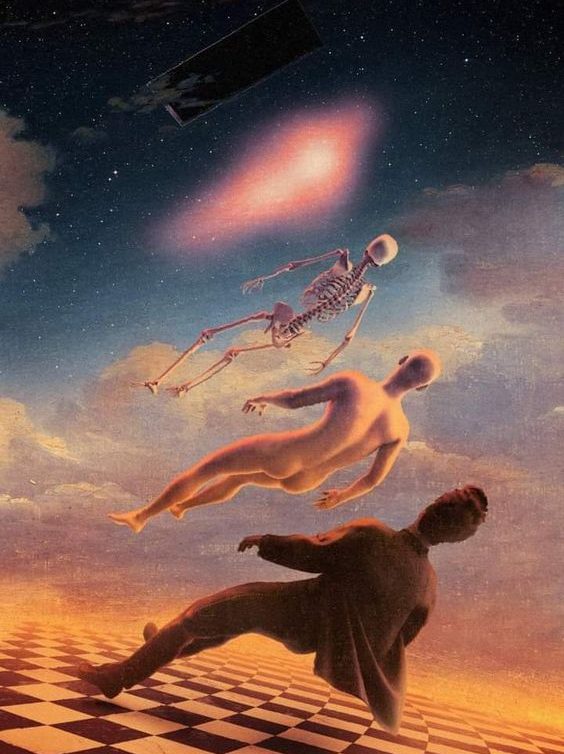
While scientists fumble in the dark trying to understand the meaning of consciousness, Allah has already provided guidance and knowledge regarding this matter.
The concepts of the soul, nafs (or self), “عقل” (aql or intellect), and qalb (or heart) play important roles in understanding the true nature of humans and their relationship with Allah Subhana Wata’ala.
These four elements are intertwined with the body and are connected to one another, forming the identity and existence of humans as living organisms, with emotions and perceptions, intellectual abilities, and mechanisms such as movement and the like.
Roh
The soul is an important element granted by Allah to humans and other creatures. The soul is the source of life and the differentiator between living and non-living things. A simple analogy is that the soul is like an energy, such as electricity, that makes something come alive.
It is important to note that in Islam, the soul is not only used to refer to the entity breathed into the body to give it life, but actually has a much broader spectrum. The words of Allah recorded in the Quran use the term soul in several contexts.
The first condition we will discuss is the soul as the source that gives life to Allah’s creation, particularly the body of Prophet Adam, as stated in Surah Al-Hijr, verse 29:
“When I have proportioned him and breathed into him of My Spirit, then fall down to him in prostration.”
Surah Al-Hijr 15:29
In this verse, Allah Azza Wajalla, who is also known as Al-Khaliq, breathed the soul that He had created into the body of Prophet Adam to give him life and make him alive.
The chronology of the creation of Prophet Adam’s body, then Allah breathing the soul into it, followed by the extraction of all souls from his back, and eventually being gathered in the gathering place (Mahsyar) has been presented in my previous video along with references.
If you have not yet watched that video, I kindly ask that you do so to provide a broader context and align with what I am trying to convey in this episode.
Another instance where Allah uses the term “soul” refers to the angel Jibril, who conveys the revelation, which generally gives life to the hearts of humans and serves as mercy and guidance for life, as mentioned in Surah An-Nahl:
“Say, ‘The Pure Spirit (Jibril) has brought it down from your Lord with truth to strengthen those who believe and as a guidance and good tidings for the Muslims.’”
Surah An-Nahl 16:102
Jibril, who is also referred to as “Ruh-Al-Quds” or “The Holy Spirit,” also provided assistance and support to Prophet Isa, as mentioned in Surah Al-Baqarah, verse 87:
“And indeed We gave to Musa the Scripture and followed him up with a succession of messengers. And We gave Isa son of Maryam clear proofs and supported him with the Pure Spirit (Jibril). Is it then that whenever there comes to you a messenger with what your souls do not desire, you become arrogant? And some you deny and some you kill.”
Surah Al-Baqarah 2:87
and also verse 253 in the same Surah:
“And We gave Isa son of Maryam clear proofs (miracles) and We supported him with the Pure Spirit (Jibril).”
Surah Al-Baqarah 2:253
The angel Jibril is also called the trustworthy spirit, Ar-Roh Al-Amin, as mentioned in Surah Ash-Shu’ara:
“It is brought down by the trustworthy Spirit (Jibril).”
Ash-Shu’ara ayat 26:193
So in short, the angel Jibril is a spirit as mentioned by Allah in His words.
Furthermore, Allah Azza Wajalla has also made the Quran a spirit that acts in bringing to life the commands of Allah and as a light that illuminates the hearts of the believers, as mentioned in Surah Ash-Shuraa:
“And thus We have revealed to you (O Muhammad) a Spirit (the Quran) by Our command. You did not know what the Scripture was, nor did you know what faith was. But We have made it a light by which We guide whom We will of Our servants. And indeed, you (O Muhammad) are guiding to a straight path.”
Surah Ash-Shuraa ayat 42:52
The word roh is also used to refer to help from Allah in aiding His believing servants, as mentioned in Surah Al-Mujadila:
“You will not find a people who believe in Allah and the Last Day, loving those who oppose Allah and His Messenger, even if they were their fathers, or their sons, or their brothers, or their kindred. Those are the ones in whose hearts Allah has set faith and whom He has supported with a spirit from Him. And He will admit them to Gardens beneath which rivers flow, to abide therein forever. Allah is pleased with them, and they are pleased with Him. Those are the party of Allah. Unquestionably, the party of Allah are the successful.”.
Surah Al-Mujadila 58:22
Prophet Isa is a spirit created from the word of Allah, as mentioned in Surah An-Nisa’:
“O People of the Scripture (Jews and Christians)! Do not commit excess in your religion or say about Allah except the truth. The Messiah, Isa son of Maryam, was but a messenger of Allah and His word which He directed to Maryam and a soul (spirit) from Him. So believe in Allah and His messengers, and do not say, ‘Three.’ Desist – it is better for you. Indeed, Allah is but one God. Exalted is He above having a son. To Him belongs whatever is in the heavens and whatever is on the earth. And sufficient is Allah as Disposer of affairs.”
Surah An-Nisa’ 4:171
According to the Tafsir of Ibn Kathir, the creation of Prophet Isa in the womb of his mother Maryam is no different from the creation of Prophet Adam, as stated in Surah Ali-Imran.
“Indeed, the example of Isa (Jesus) to Allah is like that of Adam. He created him from dust; then He said to him, ‘Be,’ and he was.”
Surah Ali-Imran 3:59
In the Tafsir of Ibn Kathir, Ibn Abi Hatim said, “It is not the word that made Isa, but with that word, Isa was created. The word was brought by Jibril to Maryam and then breathed into her with the permission of Allah, and thus Isa (Peace Be Upon Him) was created. This is the authentic opinion.” [4]
Nafs
“Nafs” is an Arabic term that generally refers to the self or soul. In the Quran and Hadith, the term “nafs” is mentioned repeatedly and has several meanings depending on its context, such as soul, blood, body, the human form, and the self.
The words “nafs” and “soul” often have overlapping meanings. For example, in the hadith where the Prophet (PBUH) mentions the soul being taken from the body of Abu Salamah, the word used is “nafs” and not “soul.” [12]
The term nafs (نَفْس) refers to the “self” or “soul,” encompassing aspects of the human psyche, including desires, emotions, and consciousness. The Quran describes different states or levels of the nafs, each representing a stage in spiritual development:
- Nafs al-Ammara (Commanding Soul):
- This level represents the unrefined state of the soul that inclines toward evil and succumbs to base desires. The Quran mentions it in Surah Yusuf (12:53): “Indeed, the soul is a persistent enjoiner of evil…”
- It is associated with the struggle against temptation and requires discipline to overcome.
- Nafs al-Lawwama (Reproaching Soul):
- This stage reflects a soul that is self-critical, blaming itself for shortcomings and sins. It oscillates between good and evil but has an awareness of its flaws.
- Mentioned in Surah Al-Qiyamah (75:2), it symbolizes the conscience that reproaches its owner for moral lapses.
- Nafs al-Mutma’inna (Tranquil Soul):
- The highest state of nafs, where the soul achieves peace and contentment by submitting fully to Allah’s will. It is free from guilt and worldly distractions.
- Referenced in Surah Al-Fajr (89:27-28): “O tranquil soul, return to your Lord well-pleased and pleasing.”
In short, “nafs” is the combination of both the soul and the body. It is the nafs that will be admitted into either Heaven or Hell because it is the nafs that experiences everything such as pleasure or pain, joy or sadness, and so on.
The soul alone cannot experience all these things because the soul is likened to an energy that merely makes a creature alive. However, as discussed in the previous minutes, in the Islamic perspective, the soul gives life to something within a much broader spectrum.
Aql
The origin of the word “Aql” in Arabic means to tie or bind. In pre-Islamic times, this term was used in the context of tying a camel to prevent it from wandering too far. This word carries a metaphorical meaning when applied to intellectual values.
“Aql” is a gift from Allah that enables humans to think, reflect, and understand. Through Aql, individuals can recognize the signs of Allah in the universe, distinguish between right and wrong, and make correct decisions regarding morals and ethics. It is from here that the Malay word “akal” derives its meaning.
The Quran and Hadith often emphasize the use of reason as a means to attain a deeper understanding of faith and the world. Islam is the only religion that emphasizes the importance of using intellect and reasoning in evaluating matters.
By using Aql, believers can strengthen their faith, improve their behavior, and ultimately seek a closer relationship with Allah. The guidance provided by the Quran and Hadith reminds us of the important role that reason plays in guiding a righteous and meaningful life.
Qalb
“Qalb” refers to the heart in two meanings: physical and spiritual. The word literally means “to turn” in Arabic, indicating that the heart is always in a state of motion, fluctuating back and forth. [6,7]
Regarding the fluctuating heart, a hadith classified as Hasan regarding a prayer that the Prophet (PBUH) frequently recited when he was with one of his wives, Umm Salamah, has been narrated by Shahr Bin Hawshab. [8] This hadith is collected by At-Tirmidhi in the chapter on Du’a.
When Umm Salamah was asked about the prayer that the Prophet (PBUH) often recited when he was with her, she explained that the Prophet frequently prayed to Allah to keep his heart steadfast in His religion. Umm Salamah then asked him why he often prayed this way.
The Prophet (PBUH) replied in his hadith…
“O Umm Salamah! Indeed, there is no person whose heart is not between the Two Fingers of Allah. He strengthens whom He wills, and He leads astray whom He wills.”
Jami` At-Tirmidhi 3522
The heart is also considered the center of human personality as well as the source of both good and evil, as mentioned in the hadith of the Prophet (PBUH) recorded in Sahih Bukhari, narrated by An-Nu’man Bin Bashir:
“Beware, in the body there is a piece of flesh. If it is good, the whole body will be good. If it is corrupt, the whole body will be corrupt. That piece of flesh is the heart.”
Sahih Al-Bukhari 52
In a hadith collected by Sahih Muslim, the Prophet (PBUH) emphasized that Allah does not look at the appearance or body of a person, but rather at their heart. [9] When the Prophet (PBUH) said this, he pointed his finger to his chest.
The word he used when pointing his finger to the chest was “صَدْرِهِ” (sadr). The root word is “sadr.” According to the Mufti of the Federal Territories, from its function, sadr serves as the space where the heart and the soul meet, as well as the place for intellect. [10]
The relationship between sadr (chest) and qalb (heart) is like that of a well, where the qalb is the source of the spring, and sadr is the place that holds the water. Imagine the Zamzam well.
As for its relationship as the place for intellect, sadr functions as the place for memorizing knowledge acquired through lessons and the senses. For example, rulings, information, and all knowledge gained.
Therefore, for this reason, in my opinion, to make learning easier, we must ensure that our hearts remain pure and correct our intention to learn for the sake of Allah. Insya-Allah, even if we are not naturally talented, some of that knowledge will stick with us, and we will be blessed by that knowledge.
Conclusion
In conclusion, the creation of humans consists of five main elements: body, soul, intellect, desires, and heart. [11] All these elements combine to form the nafs. This is what shapes human consciousness and distinguishes a living body from a dead one.
The heart (qalb) plays an important role in shaping a person’s character. If the heart is pure, the person will be good.
While scientists are still puzzled in their search for answers about “consciousness,” we, as Muslims, have had this knowledge for centuries. Truly, Islam is a mercy and a guide for mankind.
Even the people of the Jahiliyyah were able to be civilised, starting from nothing, without written documents or anything, yet the Arab nation continued to prosper, leading to the golden age of Islam in the past, a mercy from the spirit of revelation and knowledge sent down by Allah Azza Wajalla.
This mercy from Allah continues to spread to our homeland and will continue to flourish, enriching the Earth of Allah until it reaches every corner of the world. Let us be grateful for the blessings of this religion. Say Alhamdulillah.
Citations:
- Ahmad Iqram Mohamad Noor. (2022). Tersesat: Kebatilan Gerakan New Age (Edisi Kemaskini). NHA.
- Goff, P. (2024, February 20). Understanding consciousness goes beyond exploring brain chemistry. Scientific American. https://www.scientificamerican.com/article/understanding-consciousness-goes-beyond-exploring-brain-chemistry/
- Baars, Bernard J., In the Theater of Consciousness: The Workspace of the Mind (New York, 1997; online edn, Oxford Academic, 1 May 2009), https://doi.org/10.1093/acprof:oso/9780195102659.001.1 accessed 28 June 2024.
- Tafsir Ibn Kathir: Vol. Jilid 2 (M. Abdul Ghoffar E.M, Trans.). (1994). Pustaka Imam asy-Safi’i. p468
- Sahih Muslim 921a – The Book of Prayer – Funerals – كتاب الجنائز – Sunnah.com – Sayings and Teachings of Prophet Muhammad (صلى الله عليه و سلم). (n.d.). https://sunnah.com/muslim:921a (The eyes follow the soul)
- Wikipedia contributors. (2024, May 23). Qalb – Wikipedia. https://en.wikipedia.org/wiki/Qalb#cite_note-FOOTNOTENasrChittick200788-6
- Unlocked, A. (2021, December 6). The Quranic Word Series: Qalb. Arabic Unlocked. https://arabicunlocked.com/the-quranic-word-series-qalb-heart/
- Chapters on Supplication – Sunnah.com – Sayings and teachings of Prophet Muhammad (صلى الله عليه و سلم). (n.d.). https://sunnah.com/tirmidhi:3522 (The Changing Heart)
- Sahih Muslim 2564b – The Book of Virtue, Enjoining Good Manners, and Joining of the Ties of Kinship – كتاب البر والصلة والآداب – Sunnah.com – Sayings and teachings of Prophet Muhammad (صلى الله عليه و سلم). (n.d.). https://sunnah.com/muslim:2564b (Allah seeing the heart)
- Pejabat Mufti Wilayah Persekutuan – AL-AFKAR #35: MAKSUD QALB, FU’AD DAN SADR. (2019, January 5). https://www.muftiwp.gov.my/ms/artikel/al-afkar/2986-al-afkar-35-maksud-qalb-fu-ad-dan-sadr
- Khaidzir Hj. Ismail, Syaidatun Nazirah Abu Zahrin, & Jamsari Alias (Eds.). (2018). Islam & psikologi: dari perspektif kemanusiaan. UKM Press.
- Sahih Muslim 921a – The Book of Prayer – Funerals – كتاب الجنائز – Sunnah.com – Sayings and Teachings of Prophet Muhammad (صلى الله عليه و سلم). (n.d.). https://sunnah.com/muslim:921a (Dead man fixed eye)
- Staples, T. (2019, August 20). Jesus is God. Catholic Answers. https://www.catholic.com/magazine/print-edition/jesus-is-god (Jesus PBUH possess essence of God)
- Contributors to Wikimedia projects. (2023, October 12). 21 grams experiment. Simple English Wikipedia, the Free Encyclopedia. https://simple.wikipedia.org/wiki/21_grams_experiment
- MSEd, K. C. (2024, January 17). Phineas Gage: His accident and Impact on Psychology. Verywell Mind. https://www.verywellmind.com/phineas-gage-2795244
- Elaine Cinderella Esposito (1934-1978) – Find a. . . (1934, December 3). https://www.findagrave.com/memorial/179002503/elaine-cinderella-esposito
- The concept of Ruh in Islam – Rahbar home page. (2021, December 11). https://rahbar.co.uk/the-concept-of-ruh-in-islam/
- Moslem Digital. (2020b, June 10). Mengenal RUH, NAFS (JIWA) dan Ketika Manusia di Surga – Ustadz Abdul Somad Lc. MA,. PH. D [Video]. YouTube. https://www.youtube.com/watch?v=oOG4tLxUChY
Penghargaan:
- Ahmad Iqram Mohamad Noor Channel. (2022, September 17). DATUK GONG: Dewa Melayu yang disembah orang Cina [Video]. YouTube. https://www.youtube.com/watch?v=DaGRYivXUcY
- National Geographic. (2016, April 19). The Hindu Interpretation of Creation | The Story of God [Video]. YouTube. https://www.youtube.com/watch?v=bW_awN9uV6w
- Plainly Difficult. (2021, October 23). The Dark side of Science: The 21 grams Experiment 1907 weighing the soul (Short Documentary) [Video]. YouTube. https://www.youtube.com/watch?v=8L7JFfnmZyk
- ThinkingAllowedTV. (2010, August 21). Bernard Baars: How Consciousness Functions – Thinking Allowed DVD w/ Dr. Jeffrey Mishlove [Video]. YouTube. https://www.youtube.com/watch?v=VVP6iOCpbV8
- Moslem Digital. (2020, June 10). Mengenal RUH, NAFS (JIWA) dan Ketika Manusia di Surga – Ustadz Abdul Somad Lc. MA,. PH. D [Video]. YouTube. https://www.youtube.com/watch?v=oOG4tLxUChY



 Infiniti Islam
Leave a comment