


Introduction
In the life of a Muslim, the foundation of faith plays a very important role in shaping one’s worldview, daily practices, and relationship with the Creator. Islam is not only a religion but also a complete way of life, offering guidance to humans in various aspects of life. In its teachings, there are six main principles known as the Pillars of Faith, which form the basis of a Muslim’s belief.
The Pillars of Faith are the foundation of spiritual conviction and morality, guiding individuals toward the truth, providing purpose to life, and maintaining harmony and peace between themselves and the God who created them.
Allah’s words in Surah An-Nisa emphasize the importance of these pillars of faith, stating that if we do not believe in any one of them, we will be in misguidance.
يَـٰٓأَيُّهَا ٱلَّذِينَ ءَامَنُوٓا۟ ءَامِنُوا۟ بِٱللَّهِ وَرَسُولِهِۦ وَٱلْكِتَـٰبِ ٱلَّذِى نَزَّلَ عَلَىٰ رَسُولِهِۦ وَٱلْكِتَـٰبِ ٱلَّذِىٓ أَنزَلَ مِن قَبْلُ ۚ وَمَن يَكْفُرْ بِٱللَّهِ وَمَلَـٰٓئِكَتِهِۦ وَكُتُبِهِۦ وَرُسُلِهِۦ وَٱلْيَوْمِ ٱلْـَٔاخِرِ فَقَدْ ضَلَّ ضَلَـٰلًۢا بَعِيدًا
Surah An-Nisa 4:136
O you who have believed, believe1 in Allāh and His Messenger and the Book that He sent down upon His Messenger and the Scripture which He sent down before. And whoever disbelieves in Allāh, His angels, His books, His messengers, and the Last Day has certainly gone far astray.
Without a strong belief in these pillars, a Muslim will lose direction and will not be able to attain true inner peace. Therefore, understanding and embracing each pillar of faith is a necessity that is obligatory for every Muslim.
Without belief in and full understanding of each of these pillars, a Muslim will weaken their Islamic identity. They will begin to question Allah, His Book, and His Messenger. Even further, they may neglect the pillars of Islam, and worse still, abandon the religion that holds the truth.
Each of these pillars encompasses various aspects, including belief in Allah and other unseen matters. Belief in these pillars is not just a verbal declaration, but a faith that comes from the heart, manifested through actions, and strengthened with knowledge.
This article will continue with other articles that discuss each of these pillars in detail along with strong evidence. But before that, let us look at what these pillars of faith are.
1. Belief in Allah
Here’s the translation:
Allah is the God who created this universe and everything in it. The existence of the universe and all its contents is a clear proof of the existence of the Almighty Creator. Allah’s words in Surah Ath-Thur:
أَمْ خُلِقُوا۟ مِنْ غَيْرِ شَىْءٍ أَمْ هُمُ ٱلْخَـٰلِقُونَ
Surah Ath-Thur 52:35
Or were they created by nothing, or were they the creators [of themselves]?
This is a rhetorical question for those who deny the existence of God as the Creator and believe that everything happens by chance. Yes, we are talking about atheists with their false beliefs. In Surah Al-Ikhlas, Allah has already explained His attributes for us to believe in.
قُلْ هُوَ ٱللَّهُ أَحَدٌ ١ ٱللَّهُ ٱلصَّمَدُ ٢ لَمْ يَلِدْ وَلَمْ يُولَدْ ٣ وَلَمْ يَكُن لَّهُۥ كُفُوًا أَحَدٌۢ ٤
Surah Al-Ikhlas (Entirely)
Say, “He is Allāh, [who is] One, Allāh, the Eternal Refuge. He neither begets nor is born, Nor is there to Him any equivalent.
This short Surah is very logical when deeply considered. The attributes of Allah explained in this Surah also make Him the one and only God, different from any other deity in any religion on this Earth.
This is also the belief in Tawhid, which is the belief that God is One, indivisible, and there is nothing or no one on this Earth that is comparable to Him. This concept is also known as monotheism.
In Surah Muhammad, Allah firmly states that there is no god other than Himself, and we are required to seek forgiveness from Him for every mistake we make.
فَٱعْلَمْ أَنَّهُۥ لَآ إِلَـٰهَ إِلَّا ٱللَّهُ وَٱسْتَغْفِرْ لِذَنۢبِكَ وَلِلْمُؤْمِنِينَ وَٱلْمُؤْمِنَـٰتِ ۗ
Surah Muhammad 47:19
So know, [O Muḥammad], that there is no deity except Allāh and ask forgiveness for your sin1 and for the believing men and believing women. And Allāh knows of your movement and your resting place.
Allah is the source of all glory, power, and knowledge. All His commands and knowledge are conveyed to humanity through the intermediaries of the angels.
2. Believe in the Angels
Angels are one of Allah’s creations that exist in the unseen realm. These beings are created from light and possess extraordinary abilities that humans do not have. Among their abilities are moving swiftly between two very distant places and changing form from light to the form of a human.
We will discuss more about angels in other articles, such as their names and duties, but in this article, I would like to emphasize that angels have integrity or honesty that should not be questioned because these beings are created without the ability to choose or “free will.”
Without “free will,” there is no desire to oppose Allah’s commands or distort His revelation for the angel’s own benefit. Therefore, all revelations received from Allah are delivered to humans without any flaws or distortion. Angel Jibril is entrusted with bringing the revelation from Allah to the human agents known as messengers and prophets.
3. Believe in the Books
Revelations were sent down and delivered by Angel Jibril to many prophets and messengers chosen by Allah to spread the knowledge of Tawhid, worshiping Him, along with various other divine teachings to humanity according to their respective eras.
Some of these revelations were compiled into books, and we are obligated to believe in their existence. Linguistically, the word kitab means book. In Surah Al-A’raf, it is explained that Prophet Musa received revelation in the form of tablets, referred to as lauh.
وَكَتَبْنَا لَهُۥ فِى ٱلْأَلْوَاحِ مِن كُلِّ شَىْءٍۢ مَّوْعِظَةًۭ وَتَفْصِيلًۭا لِّكُلِّ شَىْءٍۢ
Surah Al-A’raf 7:145
And We wrote for him on the tablets [something] of all things – instruction and explanation for all things, [saying], “Take them with determination and order your people to take the best of it. I will show you the home of the defiantly disobedient.
There are 4 books that we are obligated to believe in:
- Al-Quran:
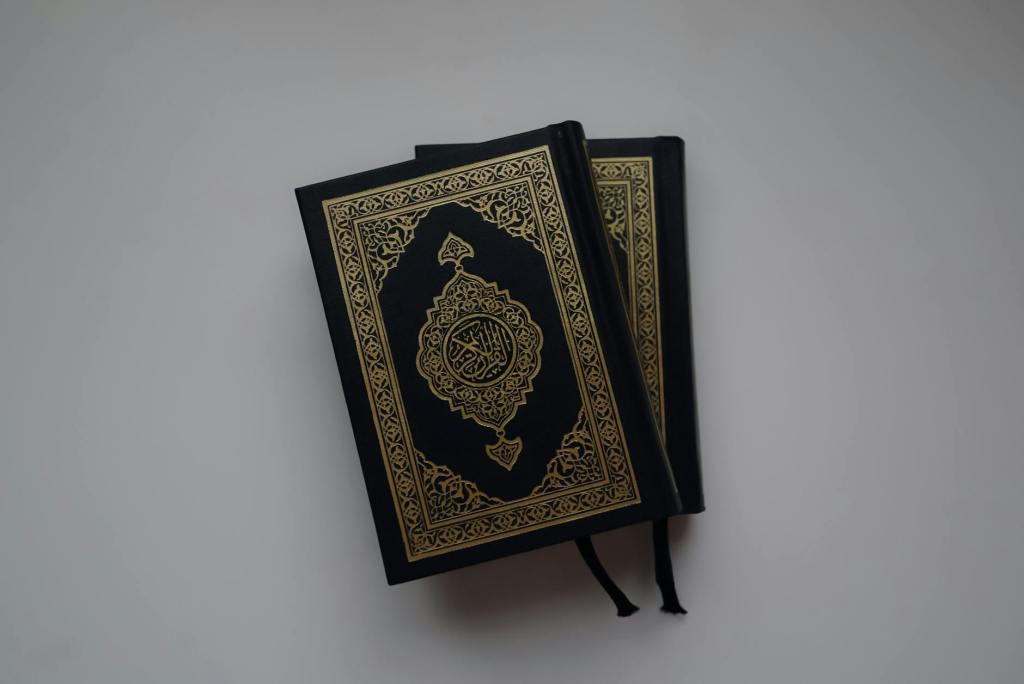
Revealed to our beloved Prophet, Prophet Muhammad (peace be upon him), the Quran perfects the teachings of the previous scriptures that had been altered by human hands. As the final scripture, it was revealed to serve as a guide for all of humanity, regardless of race, ethnicity, or era, and remains eternally relevant until the Day of Judgment as a complete and perfect source of guidance. - The Torah (Taurat):
Revealed to Prophet Musa (Moses, peace be upon him) to guide the Children of Israel (Bani Israil). It is known as the Torah today, and for Christians, the Torah is part of the Bible. While we are required to believe in the Torah, we also believe that the version they have today has been severely corrupted with many distortions made by their priests. - The Psalms (Zabur):
Revealed to Prophet Dawud (David, peace be upon him), who was also sent to guide the Children of Israel. Today, this book is referred to as the Psalms or Mazmur in the Bible. Its fate is no different from that of the Torah. - The Gospel (Injil):
Revealed to Prophet Isa (Jesus, peace be upon him), who was also sent to the Children of Israel. Some believe that the Gospel is the Injil, while others argue that the Gospel is not the revealed scripture but rather akin to hadith in Islamic tradition. Wallahu a‘lam bis-sawab (only Allah knows best).
As outlined above, these books served as guidance and a way of life for humanity, delivered through the messengers of Allah.
4. Believe in the Prophets
Messengers (Rasul) are men chosen by Allah to deliver His revelations to humanity. They are Allah’s agents among humans, granted honor and special abilities such as miracles by His permission.
Allah says:
وَلَقَدْ بَعَثْنَا فِى كُلِّ أُمَّةٍۢ رَّسُولًا أَنِ ٱعْبُدُوا۟ ٱللَّهَ وَٱجْتَنِبُوا۟ ٱلطَّـٰغُوتَ ۖ
Surah An-Nahl 16:36
And We certainly sent into every nation a messenger, [saying], “Worship Allāh and avoid ṭāghūt.”1 And among them were those whom Allāh guided, and among them were those upon whom error was [deservedly] decreed. So proceed [i.e., travel] through the earth and observe how was the end of the deniers.
In addition to preaching about the Oneness of Allah and conveying the command to worship Him alone, these messengers were also entrusted with teaching humanity about the Day of Judgment.
5. Believe in the Akhirah (The Day of Judgement)
Belief in the Day of Judgment means having a clear purpose in life. This pillar emphasizes that life in this world is temporary, while the hereafter is the eternal abode.
بَلْ تُؤْثِرُونَ ٱلْحَيَوٰةَ ٱلدُّنْيَا وَٱلْـَٔاخِرَةُ خَيْرٌۭ وَأَبْقَىٰٓ
Surah Al-A’la 87:16
But you prefer the worldly life, While the Hereafter is better and more enduring.
Belief in the Day of Judgment does not mean neglecting responsibilities or abandoning opportunities in this world. Instead, the world is a field where we cultivate goodness to secure a better place in the hereafter. Belief in the hereafter also inherently makes us better individuals.
For example, belief in the Day of Judgment instills a sense of responsibility when fulfilling trusts. A person will avoid corruption and dishonesty, knowing that all their deeds will be accounted for and judged fairly.
This belief also nurtures patience in facing life’s trials and challenges. This is because they trust that whatever they endure is part of the divine decree (qada’ and qadar) and that they will be rewarded appropriately in the hereafter for their perseverance.
6. Belief in Qada’ and Qadar (Predestiny)
This is an important concept in Islam that refers to Allah’s decree over everything, which has been determined since eternity. For example, a person’s lifespan or the journey of their life, which goes through various phases of joy and sorrow.
إِنَّا كُلَّ شَىْءٍ خَلَقْنَـٰهُ بِقَدَرٍۢ
Surah Al-Qamar 54:49
Indeed, all things We created with predestination.
However, this does not mean that we have no ability to change our fate. Allah has granted us intellect, energy, and the capacity to improve our lives, as He states in Surah Ar-Ra’d:
إِنَّ ٱللَّهَ لَا يُغَيِّرُ مَا بِقَوْمٍ حَتَّىٰ يُغَيِّرُوا۟ مَا بِأَنفُسِهِمْ ۗ
Surah Ar-Ra’d 13:11
Indeed, Allāh will not change the condition of a people until they change what is in themselves.
Summary
All elements within the Pillars of Faith pertain to matters of the unseen. From the very nature of Allah, which is beyond our physical reach and imagination, to Qada’ and Qadar, which are undoubtedly intangible and unseen.
While, logically, we can hold or see the Torah, Psalms, or Gospel when handling the Bible, the reality is that we cannot see or read these scriptures in their original and unaltered form, as they have been tainted by the distortions of earlier generations.
Only by holding firmly to the Pillars of Faith can we declare the Shahada with complete conviction, hope, and submission to Allah, the Creator of us and the entire universe. Should one of these pillars waver, Islam within us collapses.
May our faith and piety remain steadfast solely with Allah, the Almighty.
Fundamentals of Believe | Pillars of Faith | Pillars of Islam | Al-Quran | History






 Infiniti Islam