

Introduction
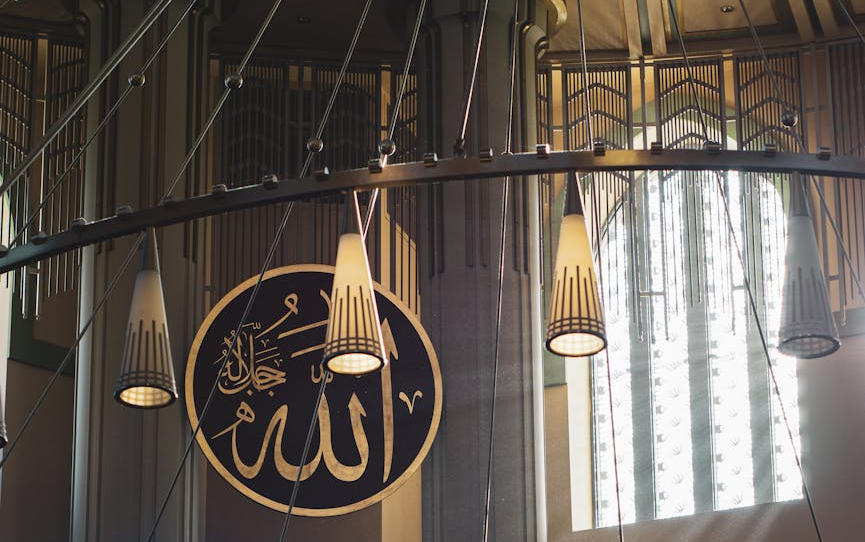
الله
Belief in Allah is the first and most fundamental pillar of faith in Islam. It requires absolute conviction that Allah is the One and Only God, the Creator and Sustainer of the entire universe. This faith is not merely a verbal declaration but also a heartfelt conviction and practice in daily actions.
Surah Al-Ikhlas succinctly describes the attributes of Allah in just four verses:
i- Say: “He is Allah, the One.“
God should not exist in multiples because a true God must possess ultimate power and wisdom. If there were at least two gods, the moment one god is overpowered by the other, it proves that the defeated one is not an all-powerful deity but a weak entity. This would create a dilemma: should we then shift our worship to the stronger god? However, this god might later be overpowered by the previously defeated one, resulting in endless uncertainty.
Furthermore, the wisdom of multiple gods would lead to contradictions in governing the universe. For example, one god might desire to create planets in a spherical shape, while the other prefers planets to be disc-shaped. Such conflicting wills would disrupt the harmony of creation and administration, proving the necessity of the oneness of God (Tawhid).
ii- “Allah, the Eternal Refuge.”
A true God should never need us to feed Him. It is absurd to witness idol worshippers offering food to their statues. Even if their intention is to seek blessings or acknowledge that their deity does not actually require food, such acts demean the very concept of a powerful deity. If their god were truly powerful, it is actually an act of insult to their “al-mighty god”.
Imagine a beggar offering ten cents to a king.
The polytheists, their god is weak and incapable of providing harm or benefit. True worship revolves around our dependence on God, not the other way around. God does not need us; rather, we are utterly dependent on Him for our existence and sustenance.
iii- “He neither begets nor is born”;
Imagine a god giving birth to a child—where would it come from? It is utterly inappropriate to attribute the act of giving birth to God, as this is a characteristic of created beings. Such an act reduces the majesty of God and confines Him to the limitations of His creation.
Likewise, God should not be born. If He can be born, it implies that He had a beginning, and anything with a beginning will eventually meet its end. A god who can be born and die is not eternal, and thus cannot truly be God.
iv- “Nor is there to Him any equivalent.“
The moment a being takes on the appearance of a human, an animal, or even a celestial body, it ceases to be God. This is because our minds, perspectives, and experiences are confined within the limits of this transient space and time. God, on the other hand, is transcendent, far above these limitations, existing beyond the boundaries of space and time, and is beyond human comprehension.
If God were to resemble anything in creation, He would be subject to the same limitations as His creation. This would contradict the very nature of divinity, which is boundless, eternal, and unparalleled.
Allah as the Lord of the Universe
“Not by chance: From bacterial propulsion systems to human DNA, evidence of intelligent design is everywhere.“
Stephen C. Mayer,
Ph.D, University of Cambridge[3]
Intelligent Design refers to a highly intelligent entity whose existence is evident in the complexity of DNA information within cells. Allah is recognized as the Lord of all creation, including all humans and other beings, with their intricate and magnificent design. This concept is affirmed in the Quran:
We will show them Our signs in the horizons and within themselves until it becomes clear to them that it is the truth.
Surah Fussilat 41:53
However, there is a misunderstanding that Allah is exclusively the God of Muslims. Before Prophet Muhammad (peace and blessings be upon him) was appointed as a messenger, he would often seclude himself in the Cave of Hira to worship. If Islam were a new religion brought by him, then to whom was he worshipping before his prophethood? It was the God of Prophet Ibrahim, whose teachings of monotheism were still upheld by a small group of Arabs at that time.
Then We revealed to you, [O Muhammad], to follow the religion of Abraham, inclining toward truth; and he was not of those who associate others with Allah.
Surah An-Nahl 16:123
Although this verse was revealed after the prophethood of the Prophet Muhammad (peace and blessings be upon him), it indicates that the religion of Prophet Ibrahim still existed. If it was still mentioned, then its practices and adherents must have also persisted, just as Allah references other religions in His revelations. With the command for the Prophet to follow the religion of Prophet Ibrahim, this serves as recognition from Allah that this religion remained pure compared to others.
The lineage of the Prophet, the Banu Hashim, was among those who preserved their monotheism. Meanwhile, the majority of the Arabs in Mecca at that time worshipped idols, which they falsely claimed were intercessors to Allah.
And they worship besides Allah that which neither harms them nor benefits them, and they say, ‘These are our intercessors with Allah.
Surah Yunus 10:18
The Messenger of Allah (SAW) Did Not Teach New Religion or New God
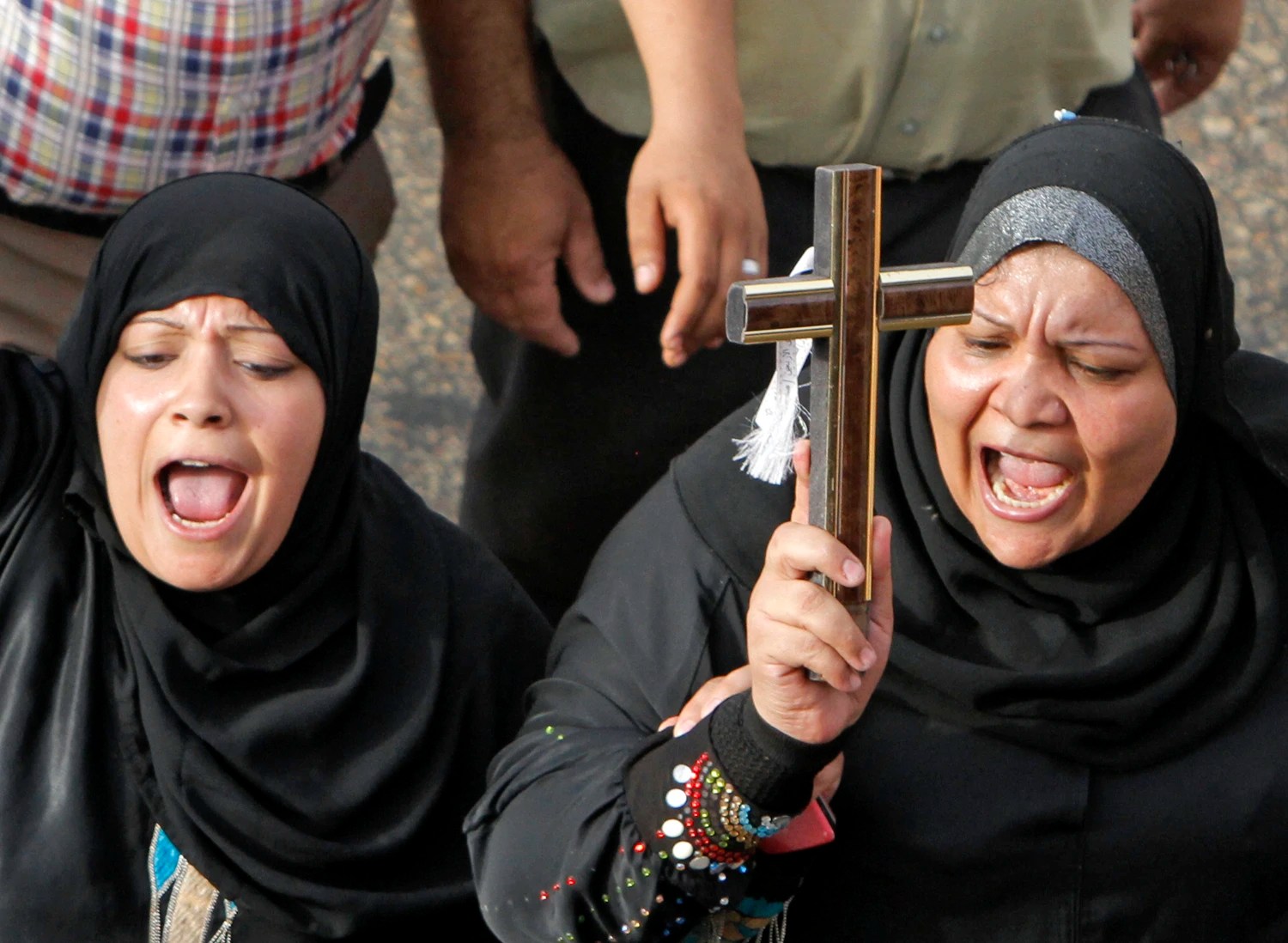
Prophet Muhammad (SAW) did not introduce the worship of a new God or a concept unfamiliar to the Arabs of Mecca at that time. In fact, they were aware of and acknowledged the existence of Allah. This term was widely used across the Arabian Peninsula, including in Arabic poetry[2] before the return of Islam through our noble Messenger, Prophet Muhammad (SAW). Moreover, in the holy scriptures of Arab-speaking Christians in the region, the term Allah was frequently used to refer to God, both then and continuing to this day.
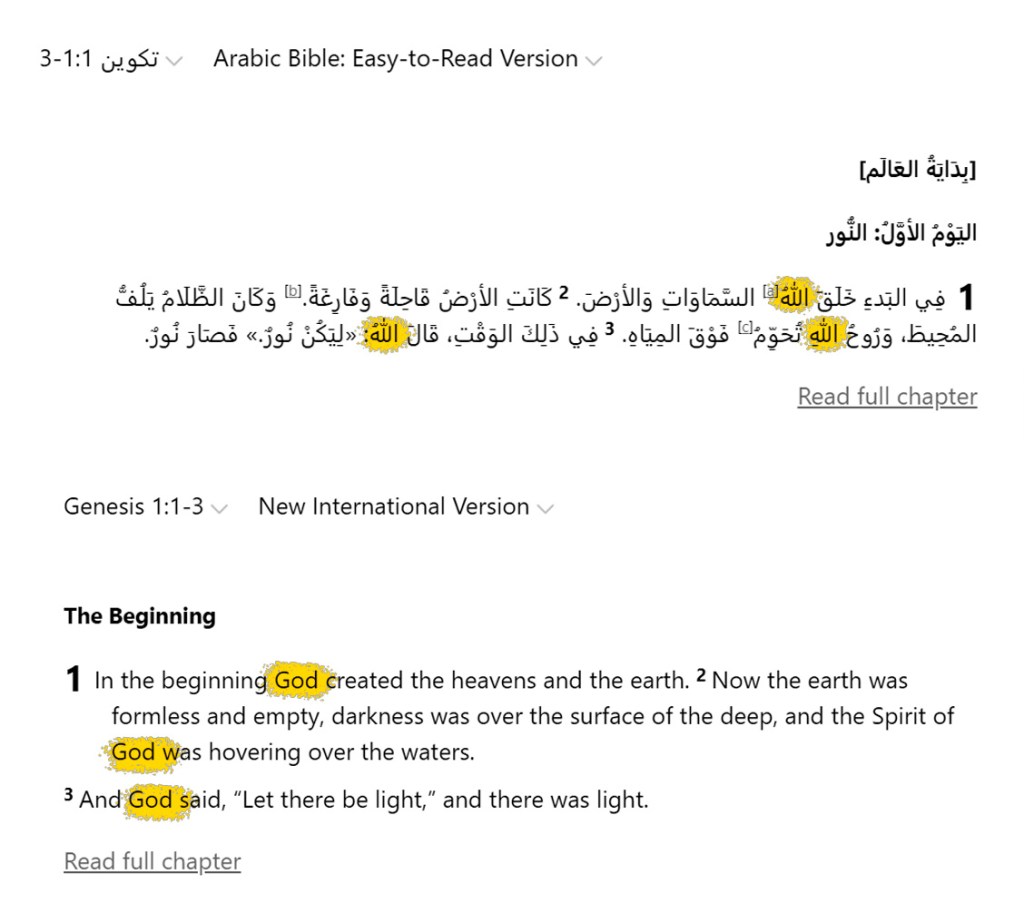
Although the polytheists acknowledged the existence of Allah, their practice at the time involved associating idols with Allah and claiming that these idols were His children.
And they attribute to Allah daughters – exalted is He.
Surah An-Nahl 16:57
Thus, Prophet Muhammad (peace be upon him) was sent to perfect and restore the teachings of monotheism that had been corrupted by previous nations. The concept of monotheism, or the belief in One God, has in fact been deeply rooted in the history of human civilization.
Tawhid
There are several religions in the world that still retain traces of the Oneness of God, despite being tainted with other concepts that associate additional elements with the attributes of the One God, such as the idea of God’s children and similar notions.
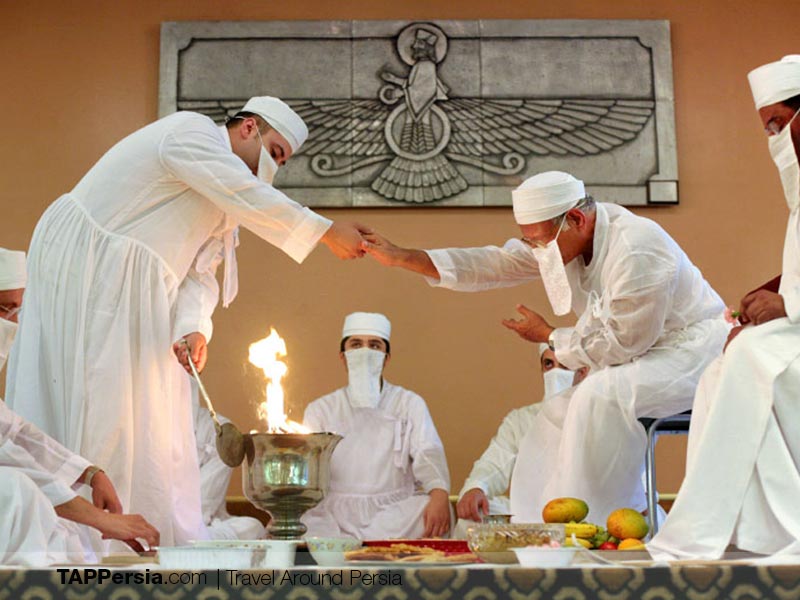
Zoroastrianism, for example, is often regarded by Western Orientalists as the oldest monotheistic religion in the world, believed to have influenced the development of Judaism, the Sabians (Mandaeans), and Christianity.
In reality, all these religions are deviations from the original tawhid brought by Allah’s messengers and corrupted by the actions of previous generations. Allah says about them:
Surah Al-Hajj 22:17
Indeed, those who have believed and those who were Jews and the Sabians and the Christians and the Magians and those who associated others with Allah – Allah will judge between them on the Day of Resurrection. Indeed Allah is, over all things, Witness.

Al-Ilah (The God)
The word Allah originates from the combination of two Arabic words: “al-“ and “ilah”.[1]
The term “al-“ is a definite article in Arabic, similar to “the” in English, which denotes specificity. Meanwhile, “ilah” means “god” or “something possessing extraordinary power.” In the context of Semitic languages, this term refers to a power beyond human reach and ability, namely divine power. The Kufan school of grammar is well-known for its view that “Allah” is a contraction of “al-ilah,” which means “the God.”[2]
Before the emergence of Islam, the term “al-ilah” was used by Arab communities to refer to the greatest deity among their gods. This term was also used by Christian Arab poets in their writings, alternating between the terms “al-ilah” and “Allah.”[2] Each other deity had its specific name, but “al-ilah” served as a generic term for the supreme god. Over time, this word was shortened to “Allah,” which continues to be used to this day. It is important to understand that during that era, the use of this term did not signify monotheism as in Islam but rather a polytheistic concept.
However, this is not surprising, as the Quran frequently argues that earlier peoples often associated Allah with other false gods, as mentioned in Surah An-Najm above. Moreover, if they were asked who created the universe, they would reply, “Allah.”
If you asked them, ‘Who created the heavens and the earth?’ they would surely say, ‘Allah.’
Surah Az-Zumar 39:38
Thus, the presence of the term Allah alongside other deities is not unusual.
Summary
Belief in Allah is the foundation for building a strong faith to become a true Muslim. It serves as the first pillar in the chain of faith, where everything begins with Allah. The creation of all that exists in the heavens and the Earth, when considered logically and scientifically, cannot deny the undeniable truth that the universe has a Creator.
Denying the existence of God will lead one into profound and evident misguidance. Their life will flounder without direction, and any happiness they might feel will be but a falsehood, further distancing them from the purpose of their creation.
Let us return to Allah and place our faith in Him.
Fundamentals of Believe | Pillars of Faith | Pillars of Islam | Al-Quran | History



Citations:
- Dr. Ng, K. W. (2008, February). The semantics of the word Allah. KrisisPraxis. Retrieved December 14, 2024, from https://krisispraxis.com/archives/2008/02/the-semantics-of-the-word-allah/
profil penulis: https://berkleycenter.georgetown.edu/people/ng-kam-weng - Sinai, N. (2019). Rain-Giver, Bone-Breaker, Score-Settler: Allāh in Pre-Quranic Poetry. Atlanta, GA: American Oriental Society.
profil penulis: https://www.ames.ox.ac.uk/people/nicolai-sinai - Discovery Institute. (n.d.). What is intelligent design? Retrieved December 14, 2024, from https://www.discovery.org/v/what-is-intelligent-design/
profil penulis: https://www.discovery.org/p/meyer/




 Infiniti Islam