

1. Islam Is Not a New Religion
The Quran and the Prophet emphasize that Islam is the continuation of the same message brought by previous prophets, reinforcing monotheism (Tawheed). Relevant verses:
- Surah Al-Ma’idah (5:48): “To you, We sent the Scripture in truth, confirming the Scripture that came before it, and guarding it in safety.”
- Surah Ash-Shura (42:13): “He has ordained for you of religion what He enjoined upon Noah and that which We have revealed to you and what We enjoined upon Abraham, Moses, and Jesus…”
These verses stress that Islam is part of an unbroken divine tradition, not a newly invented religion. Rasulullah and the Quran never claim, “This is a new religion to mankind”
2. Islam As The First Religion of Mankind Since The Beginning
When his Lord said to him (Abraham), “Submit,” he said, “I have submitted [in Islām] to the Lord of the worlds.”
Surah Al-Baqarah 2:131
Islam is a monotheistic religion that emphasizes submission to the will of God. Islam teaches that the essence of submission to Allah started with the first human, Adam (AS). Supporting verses:
- Surah Al-Baqarah (2:132): “And Abraham instructed his sons and Jacob, ‘O my sons, indeed Allah has chosen for you this religion, so do not die except while you are Muslims.’”
- Surah Al-A’raf (7:172): “When your Lord took from the children of Adam—from their loins—their descendants and made them testify of themselves, [saying to them], ‘Am I not your Lord?’ They said, ‘Yes, we have testified.’”
These verses emphasize the primordial covenant, showing Islam’s roots in the very creation of humanity.
3. Similarities Do Not Imply Copying
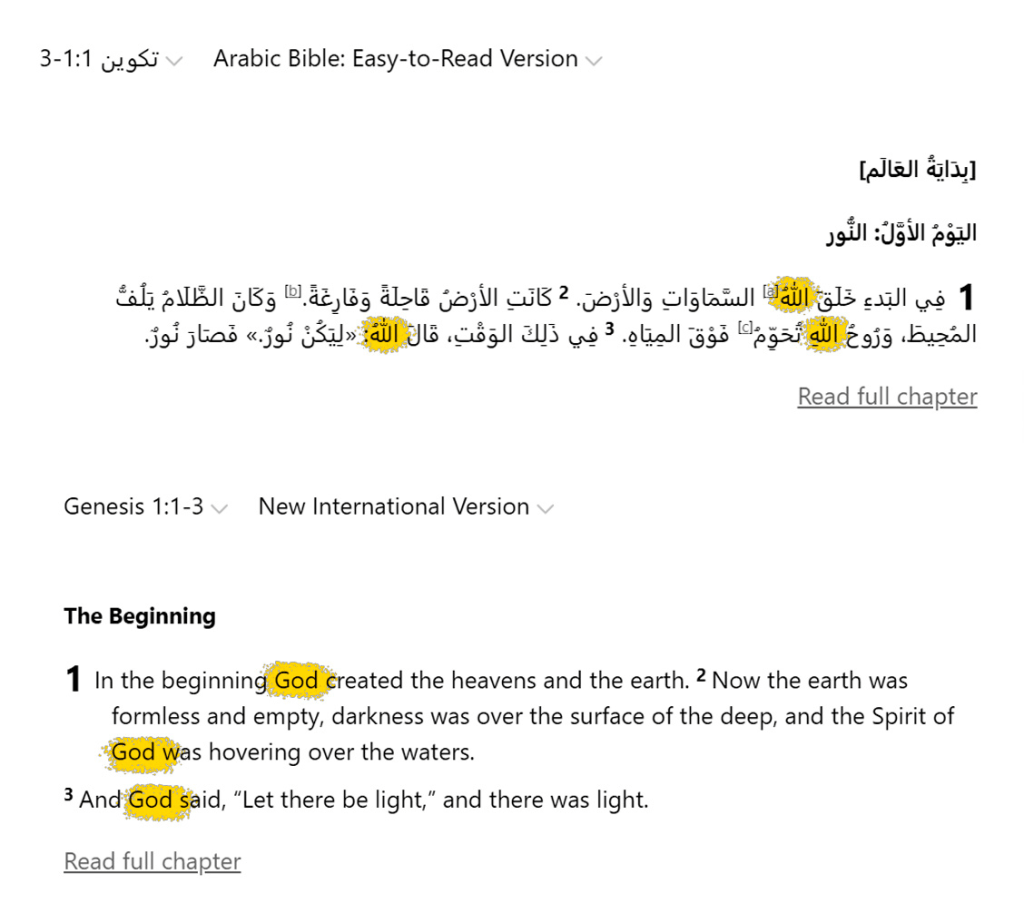
Analogies can help clarify this point. For example:
- Simple Analogy: Imagine two schools teaching similar mathematical formulas. It doesn’t mean one school copied the other; they are simply referring to the same universal truths. Similarly, practices like prostration or fasting can have universal appeal or origins in the true religion, Islam.
- This is reinforced by the idea that ancient religious practices often distort divine revelations over time, leading to superficial similarities.
4. Pagans Copying Islam
It’s easy for people to conclude that Islam copied another religion whenever they see similarities with their religion or others, often without any proof.
How about another possibility in which pre-Islamic pagan practices may have originated from a corrupted form of earlier monotheistic teachings? No one can approve or disapprove this.
For instance:
- The Kaaba, central to Islamic worship, was originally established by Prophet Ibrahim (AS) for monotheistic worship, as mentioned in Surah Al-Baqarah 2:125-127.
- Over time, pagans corrupted its purpose with idol worship, which Islam restored.
5. Allah is not new God
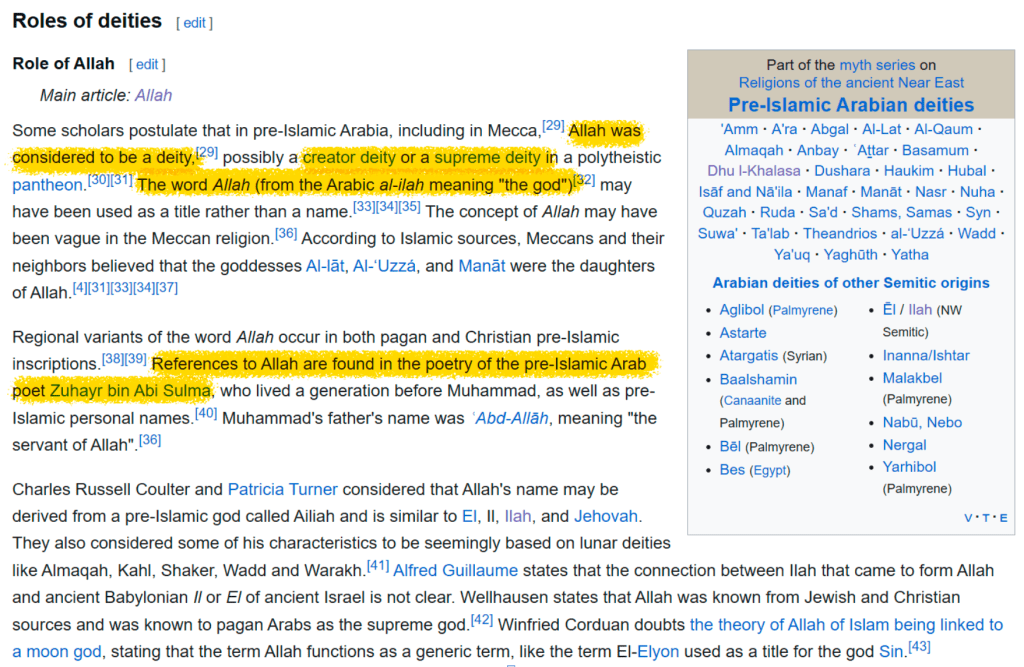
Archaeological and Historical Evidence:
- Role of Allah in Pre-Islamic Arabia: In pre-Islamic Mecca, Allah was considered a creator or supreme deity within a polytheistic framework. The Quraysh tribe, for instance, acknowledged Allah’s supremacy but also worshipped other deities, including the goddesses Al-Lāt, Al-‘Uzzá, and Manāt, whom they regarded as Allah’s daughters.[1]
- Pre-Islamic Poetry: The works of poets like Zuhayr bin Abi Sulma, who lived before Prophet Muhammad, contain references to Allah, indicating the deity’s recognition in Arabian society.[2]
- Personal Names: The use of theophoric names, such as “Abdullah” (meaning “servant of Allah”), further demonstrates the pre-Islamic acknowledgment of Allah. Notably, Prophet Muhammad’s father bore this name.
This archaeological and historical context underscores that the concept of Allah was established in Arabian religious traditions well before the advent of Islam, aligning with the Islamic view of Allah as the eternal, singular deity worshipped by earlier prophets and communities.
Mentions in the Quran:
The Quraysh of Makkah, despite their idol worship, acknowledged Allah as the supreme deity, though they associated partners with Him.
“And those who take protectors besides Him [say], ‘We only worship them that they may bring us nearer to Allah in position.’”
Surah Az-Zumar 39:3
This framework provides a strong basis for countering the claim that Islamic practices are rooted in pagan traditions. The presentation clearly demonstrates that the concept of Allah’s existence in Arabian society was not alien; rather, it was well-established.
However, the association of Allah with other deities by pre-Islamic Arabs distorted this recognition of His true singularity, which Islam sought to restore. Whether Allah is truly the one true God is a debate for another day, but this premise has a strong foundation that cannot be dismissed easily.
Citations:
- Wikipedia contributors. (2024, December 10). Religion in pre-Islamic Arabia. Wikipedia. https://en.wikipedia.org/wiki/Religion_in_pre-Islamic_Arabia
- Dr. Ng, K. W. (2008, February). The semantics of the word Allah. KrisisPraxis. Retrieved December 14, 2024, from https://krisispraxis.com/archives/2008/02/the-semantics-of-the-word-allah/
Author’s profile: https://berkleycenter.georgetown.edu/people/ng-kam-weng
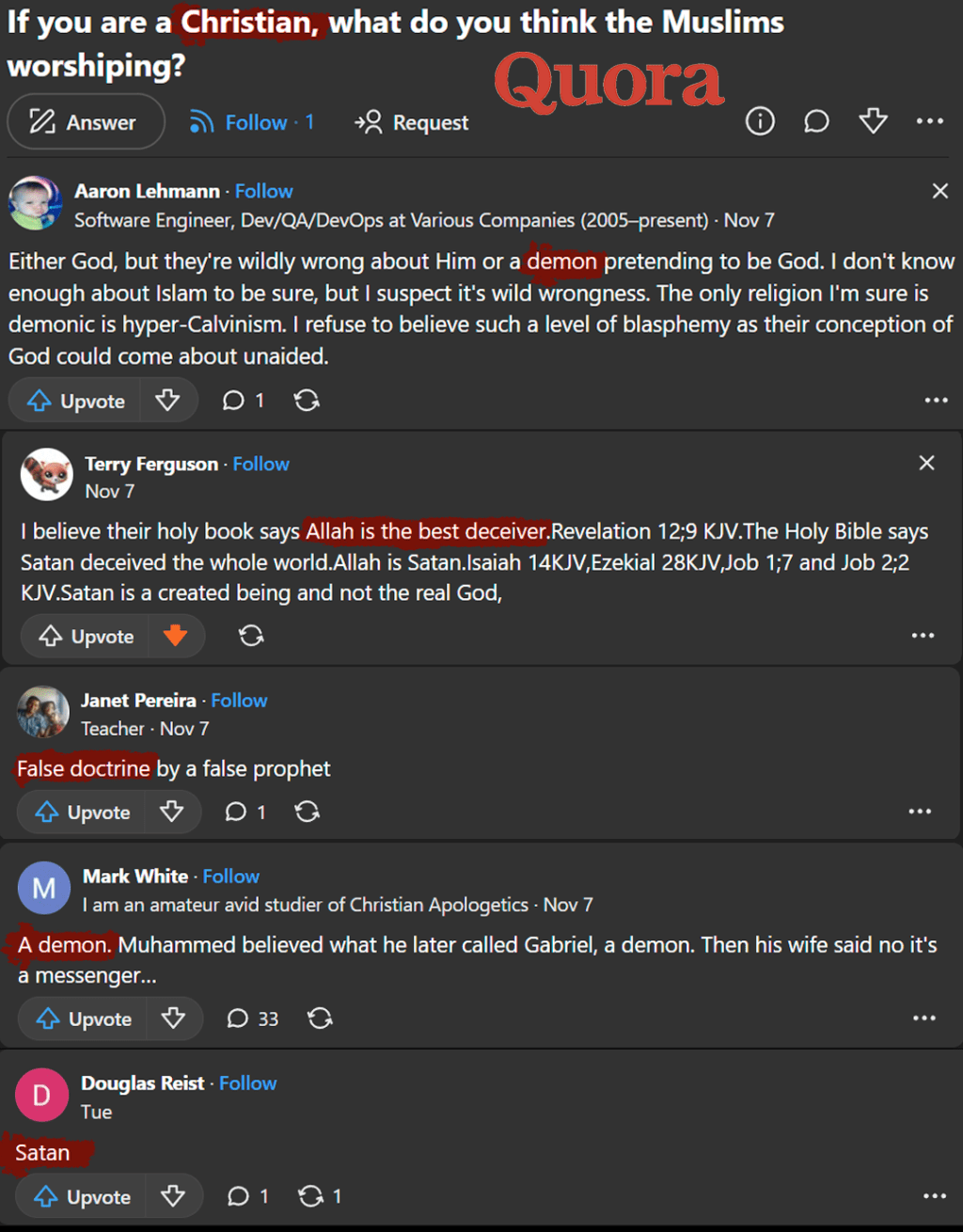



 Infiniti Islam
Leave a comment