

Introduction
A typical tactic employed by missionaries, Christians in general, and critics when they fail to defend their theological positions is to claim that Rasulullah SAW promoted immorality by allegedly lusting after his adopted son Zayd bin Harithah’s wife. According to them, this act is immoral, and they argue that Rasulullah’s teachings are influenced by personal desires. Aside from the marriage of Rasulullah with Aisha, this is one of the most frequently used arguments to discredit Islam.
To address such a claim, let’s break it down accordingly to give better perspective. This story is often misunderstood or misrepresented, so here’s a fact-based explanation:
Context of the Allegation:
This allegation is related to the one of the verse in the Quran particularly Surah Al-Ahzab:
And [remember, O Muḥammad], when you said to the one on whom Allāh bestowed favor and you bestowed favor,”Keep your wife and fear Allah,” while you concealed within yourself that which Allah is to disclose. And you feared the people, while Allah has more right that you fear Him. So when Zayd had no longer any need for her, We married her to you in order that there not be upon the believers any discomfort [i.e., guilt] concerning the wives of their claimed [i.e., adopted] sons when they no longer have need of them. And ever is the command [i.e., decree] of Allah accomplished.
Surah Al-Ahzab 33:37
Without further investigation and any effort to understand the context of the verse, some of the critics uses fabricated hadiths to support their arguments. Almost all prominent Western biographies of the Prophet SAW, no matter how cursory their engagement of other critical issues, include the elaborate details of a variant of this event which does not even appear in most Muslim biographies. The full details of this peculiar variant differ quite a bit among various narrations, but the general theme is as follows [1]:
One day the Prophet ﷺ went searching for Zayd ibn Ḥārithah (RA), then married to Zaynab (RA) (who also happened to be the Prophet’s paternal cousin). Upon reaching Zayd’s house, he discovered that Zayd (RA) had stepped out, and only Zaynab (RA) remained to greet him. Zaynab (RA) invited the Prophet in, but something in her appearance stimulated a strong attraction to her in the Prophet ﷺ, and he immediately departed, uttering, “Glory be to Allah, who causes hearts to turn!”
Zaynab informed Zayd of his visit and statement, who recognized its implication, and immediately offered to divorce Zaynab for the Prophet’s benefit. The Prophet ﷺ, however, advised Zayd to uphold his marriage with Zaynab, though he concealed his inner desire that Zayd divorce her so that he could marry her instead. Zayd for one reason or another undertook his own initiative to divorce Zaynab. The Prophet ﷺ then received a timely revelation (preserved in the aforementioned Sūrat al-Aḥzāb) that, though it censured the Prophet for concealing his desires, wed the Prophet ﷺ with Zaynab (RA) anyway and satisfied the Prophet’s deep desire.
Challenging the Narrative
The full event chronicled above or even an abridged version of it is glaringly absent from the extant works of the earliest maghāzī and sīrah compilers, most notably such doyens as ʿUrwah ibn al-Zubayr (d. 94/712), Ibn Shihāb al-Zuhrī (d. 124/741), Mūsā ibn ʿUqbah (d. 141/758), Maʿmar ibn Rāshid (d. 153/770) and of course, Muḥammad ibn Isḥāq (d. 150/767). [1]
After reviewing text and sources, it becomes clear that these traditions are not authentic, the source-based shortcoming is presence of weak narrators in the chain of narrators. Likewise, in the chain of narrators, we have seen Tabe’in or those who could not have been eye-witnesses of this story.[2] One cannot find this hadith in any written Sahih hadith collection or even online reliable sources like Sunnah.com.
Concerning the text of this tradition, it should be said that these traditions are not compatible with verses of Quran and the history of Prophet. Presence of ambiguity and discordance of these narrations with the infallibility of Prophet is another reason of rejecting this story.[2]
Tafsir Ibn Kathir
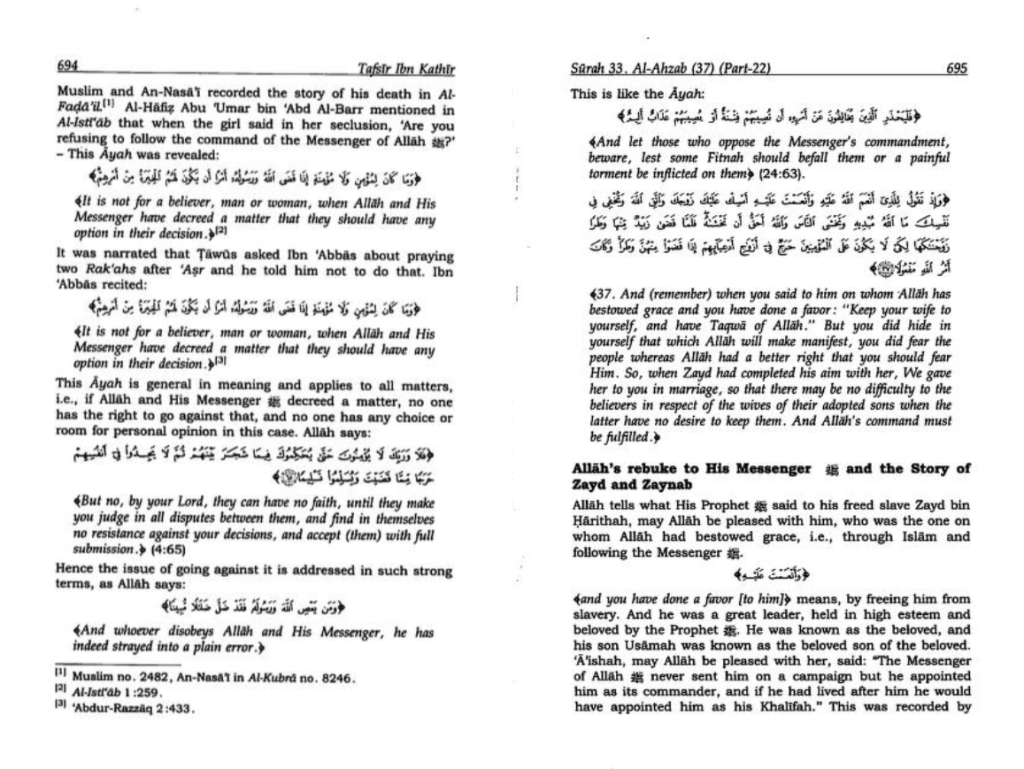
Below is a direct copy-paste of the tafsir from the Abridged Tafsir Ibn Kathir, retrieved from Quran.com. I have separated it into sections and included the Saheeh International translation for easier reading and understanding. The title has been hyperlinked for original source:
Allah’s rebuke to His Messenger and the Story of Zayd and Zaynab
Allah tells what His Prophet said to his freed slave Zayd bin Harithah, may Allah be pleased with him, who was the one on whom Allah had bestowed grace, i.e., through Islam and following the Messenger .
وَأَنْعَمْتَ عَلَيْهِ
“(and you have done a favor to him)“
“(And [remember, O Muḥammad], when you said to the one on whom Allah bestowed favor and you bestowed favor)” – Saheeh International
means, by freeing him from slavery. And he was a great leader, held in high esteem and beloved by the Prophet . He was known as the beloved, and his son Usamah was known as the beloved son of the beloved.
`A’ishah, may Allah be pleased with her, said:
"The Messenger of Allah ﷺ never sent him on a campaign but he appointed him as its commander, and if he had lived after him he would have appointed him as his Khalifah."
This was recorded by Imam Ahmad. The Messenger of Allah ﷺ had given him in marriage to the daughter of his paternal aunt (cousin), Zaynab bint Jahsh Al-Asadiyyah, may Allah be pleased with her, whose mother was Umaymah bint `Abd Al-Muttalib. For her dowery he gave her ten Dinars, sixty Dirhams, a veil, a cloak and a shirt, fifty Mudds of food and ten Mudds of dates. This was stated by Muqatil bin Hayyan.
Marriage Problem Between Zayd and Zaynab
She stayed with him for a year, more or less, then problems arose between them. Zayd complained about her to the Messenger of Allah ﷺ, who told him, “Stay with your wife and have Taqwa of Allah.”
Allah says:
وَتُخْفِى فِى نِفْسِكَ مَا اللَّهُ مُبْدِيهِ وَتَخْشَى النَّاسَ وَاللَّهُ أَحَقُّ أَن تَخْشَـهُ
(But you did hide in yourself that which Allah will make manifest, you did fear the people whereas Allah had a better right that you should fear Him.)
“(And you feared the people, while Allah has more right that you fear Him)”. – Saheeh International
Ibn Jarir narrated that `A’ishah, may Allah be pleased with her, said,
“If Muhammad ﷺ were to have concealed anything that was revealed to him of the Book of Allah, he would have concealed this Ayah:
وَتُخْفِى فِى نِفْسِكَ مَا اللَّهُ مُبْدِيهِ وَتَخْشَى النَّاسَ وَاللَّهُ أَحَقُّ أَن تَخْشَـهُ
“(But you did hide in yourself that which Allah will make manifest, you did fear the people whereas Allah had a better right that you should fear Him.)”
The Marriage of Rasulullah With Zaynab
فَلَمَّا قَضَى زَيْدٌ مِّنْهَا وَطَراً زَوَّجْنَـكَهَا
(So, when Zayd had completed his aim with her, We gave her to you in marriage,)
(So when Zayd had no longer any need for her, We married her to you) – Saheeh International
meaning, `when her marriage to Zayd was over and he had separated from her, We married her to you,’ and the One Who was her Wali (guardian) in this marriage was Allah Himself, in the sense that He revealed to the Prophet that he should go in unto her without any Wali, contractual agreement, dowery or witnesses among mankind.
Imam Ahmad recorded that Thabit said that Anas, may Allah be pleased with him, said: “When Zaynab’s `Iddah finished, may Allah be pleased with her, the Messenger of Allah ﷺ said to Zayd bin Harithah,
«اذْهَبْ فَاذْكُرْهَا عَلَي»
(Go to her and tell her about me (that I want to marry her)).
So, he went to her and found her kneading dough. He (Zayd) said, `When I saw her I felt such respect for her that I could not even look at her and tell her what the Messenger of Allah ﷺ had said, so I turned my back to her and stepped aside, and said,
`O Zaynab! Rejoice, for the Messenger of Allah ﷺ has sent me to propose marriage to you on his behalf.' She said, `I will not do anything until I pray to my Lord, may He be glorified.' So she went to the place where she usually prayed. Then Qur’an was revealed and the Messenger of Allah ﷺ came and entered without permission.
Rasulullah’s Wives Boasted To Each Other
We were there when she entered upon the Messenger of Allah ﷺ, and for the wedding feast we offered bread and meat. Then the people left, and some men stayed behind conversing in the house after they had eaten. The Messenger of Allah ﷺ went out and I followed him. He started to go around all the apartments of his wives, greeting them, and they said,
`O Messenger of Allah ﷺ, how did you find your (new) wife'
I do not know whether I or someone else told him that those people had left, so he went and entered the house, and I went to enter after him, but he drew the curtain between himself and I. The ruling of Hijab was revealed and he exhorted the people as Allah had exhorted them:
لاَ تَدْخُلُواْ بُيُوتَ النَّبِىِّ إِلاَّ أَن يُؤْذَنَ لَكُمْ
“(Enter not the Prophet’s houses, unless permission is given to you).”
– Surah Al-Ahzab, 33:53
This was also recorded by Muslim and An-Nasa’i. Al-Bukhari, may Allah have mercy on him, recorded that Anas bin Malik, may Allah be pleased with him, said, “Zaynab bint Jahsh, may Allah be pleased with her, used to boast to the other wives of the Prophet , saying,
Your families arranged your marriages, but Allah arranged my marriage from above the seven heavens.
In (our Tafsir of) Surat An-Nur we mentioned that Muhammad bin `Abdullah bin Jahsh said:
“Zaynab and `A’ishah, may Allah be pleased with them, were boasting to one another; Zaynab, may Allah be pleased with her, said,
`I am the one whose marriage was revealed from above the heaven.'`A’ishah, may Allah be pleased with her, said,`I am the one whose innocence was revealed from heaven.'So, Zaynab conceded that, may Allah be pleased with her.”
Wisdom of the Marriage
لِكَىْ لاَ يَكُونَ عَلَى الْمُؤْمِنِينَ حَرَجٌ فِى أَزْوَاجِ أَدْعِيَآئِهِمْ إِذَا قَضَوْاْ مِنْهُنَّ وَطَراً
(so that there may be no difficulty to the believers in respect of the wives of their adopted sons when the latter have no desire to keep them.)
in order that there not be upon the believers any discomfort [i.e., guilt] concerning the wives of their claimed [i.e., adopted] sons when they no longer have need of them. – Saheeh International
means, `We permitted you to marry her, and We did that so that there would no longer be any difficulty for the believers with regard to their marrying the ex-wives of their adopted sons.’ Before prophethood, the Messenger of Allah ﷺ had adopted Zayd bin Harithah, may Allah be pleased with him, and he was known as Zayd, the son of Muhammad ﷺ. Allah put a stop to this when He said:
وَمَا جَعَلَ أَدْعِيَآءَكُمْ أَبْنَآءَكُمْ
(nor has He made your adopted sons your real sons) Surah Al-Ahzab (33:4) until:
ادْعُوهُمْ لاًّبَآئِهِمْ هُوَ أَقْسَطُ عِندَ اللَّهِ
(Call them after their fathers, that is more just with Allah)
Surah Al-Ahzab (33:5)
Then this was confirmed and made even clearer by the marriage of the Messenger of Allah ﷺ to Zaynab bint Jahsh, may Allah be pleased with her, when Zayd bin Harithah divorced her.
Allah says in Ayat At-Tahrim:
وَحَلَـئِلُ أَبْنَآئِكُمُ الَّذِينَ مِنْ أَصْلَـبِكُمْ
(the wives of your sons from your own loins) (4:23)
Which specifically excludes adopted sons. This custom (of adopting sons) was widespread among them.
وَكَانَ أَمْرُ اللَّهِ مَفْعُولاً
(And Allah’s command must be fulfilled.)
And ever is the command [i.e., decree] of Allāh accomplished. – Saheeh International
means, `this that has happened was decreed by Allah and was inevitable.’ Allah knew that Zaynab, may Allah be pleased with her, would become one of the wives of the Prophet .
Sum-up of the Marriage:
- Zaynab bint Jahsh: The daughter of Rasulullah’s paternal uncle. (meaning cousin)
- Historical Background: Zaynab bint Jahsh was initially married to Zayd ibn Harithah, the Prophet’s adopted son (not biological). Their marriage faced significant difficulties due to differences in personality and compatibility, leading to discord. Eventually, Zayd chose to divorce her of his own volition.
- Adoption in Pre-Islamic Arabia: In pre-Islamic Arabia, adopted sons were regarded as if they were biological sons, inheriting the same status and rights. Islam clarified this by emphasizing that adopted children do not carry the lineage of their adoptive parents (Surah Al-Ahzab 33:4-5). This was to protect lineage and avoid confusion in inheritance and familial rights.
- Command from Allah: After Zayd divorced Zaynab, Allah commanded the Prophet Muhammad to marry her. This marriage was divinely ordained to abolish the pre-Islamic practice of treating adopted sons as biological sons (Surah Al-Ahzab 33:37). By marrying Zaynab, the Prophet practically demonstrated that there was no stigma in marrying the former spouse of an adopted son.
- Wisdom of the command: Abolishing the pre-Islamic notion that adopted sons are equivalent to biological sons, as clarified in Surah Al-Ahzab (33:4-5, 33:37). This distinction preserved lineage clarity, dismissed the stigma of marrying an adopted son’s former wife, and demonstrated that divine guidance takes precedence over cultural norms.
Refuting the “Adultery” Allegation:
- No Evidence of Lust or Immorality: The Qur’an is clear that the marriage was not a result of lust but divine command (33:37). The verse in this Surah clearly indicates that Zayd had marital issues with his wife Zaynab and sought advice from Rasulullah ﷺ. The Prophet ﷺ instructed him to continue the marriage, but Allah reproached him for what he was concealing in his heart.
- Role of Revelation: This marriage was not based on personal desire. If it were, the Prophet could have acted differently in secret rather than openly marrying her in a society where his every action was scrutinized.
- Moral Integrity of the Prophet: The Prophet Muhammad is widely recognized in Islamic and even some non-Muslim historical accounts as a man of exemplary character. Accusations of being “sex-driven” are contradicted by his life of moderation, his marriages that were largely for social, political, or compassionate reasons, and his emphasis on equality and justice.
Why These Claims Persist:
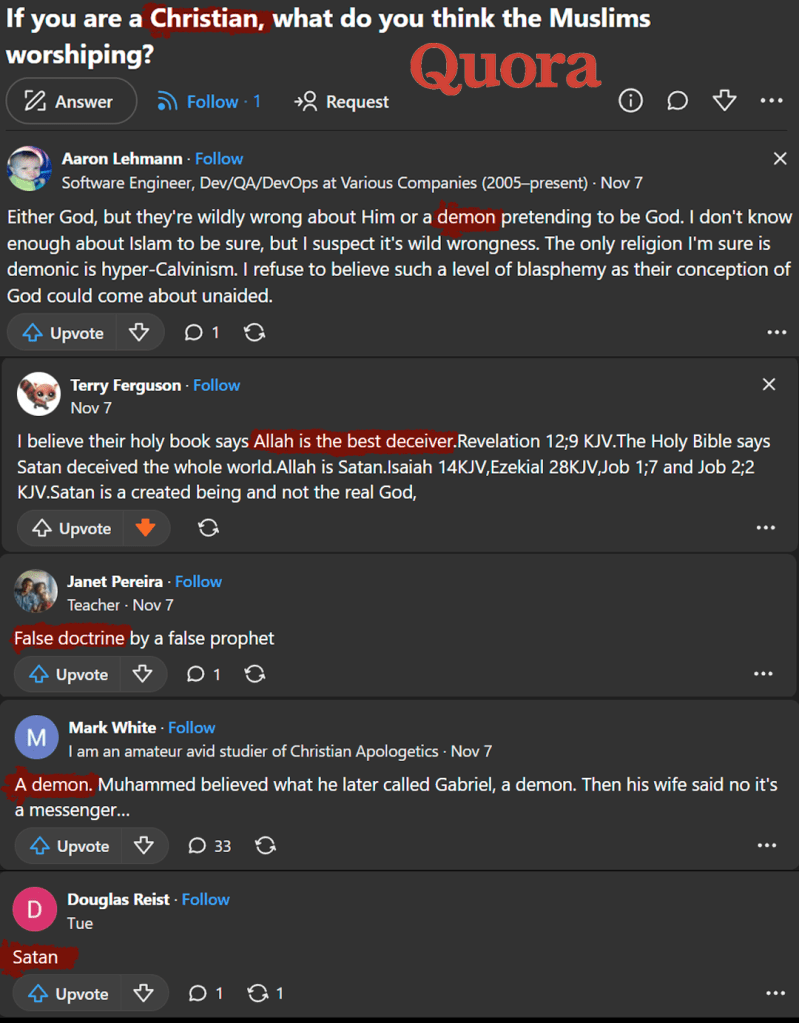
Such allegations often stem from misunderstandings of historical context or deliberate distortions intended to mislead. Critics frequently choose to ignore or outright dismiss the profound cultural and religious reforms that this marriage symbolized. Another possible reason for these persistent claims is the inability to accept the growing influence of Islam, as the number of people reverting to the faith continues to rise steadily each day, challenging preconceived narratives and biases.







Citations:
- Dr. Ashraf, H. (2022). The Prophet’s ﷺ marriage to Zaynab bint Jaḥsh: A reexamination from a historiographic perspective. Yaqeen Institute for Islamic Research. Retrieved from https://yaqeeninstitute.org.my/read/paper/the-prophets-marriage-to-zaynab-bint-jahsh
- Muhammad, M. M., & Razali, K. (2019). A review on the story of the Holy Prophet and Zaynab Bint Jahsh. ResearchGate. Retrieved from https://www.researchgate.net/publication/336993920_A_Review_on_The_Story_of_the_Holy_Prophet_and_Zaynab_Bint_Jahsh



 Infiniti Islam
Leave a comment