

Introduction
Well, skeptics might say, “Come on, man, it’s just a coincidence!”, “dude is not even close”. Well at least it’s the closest to compare with other stalks.
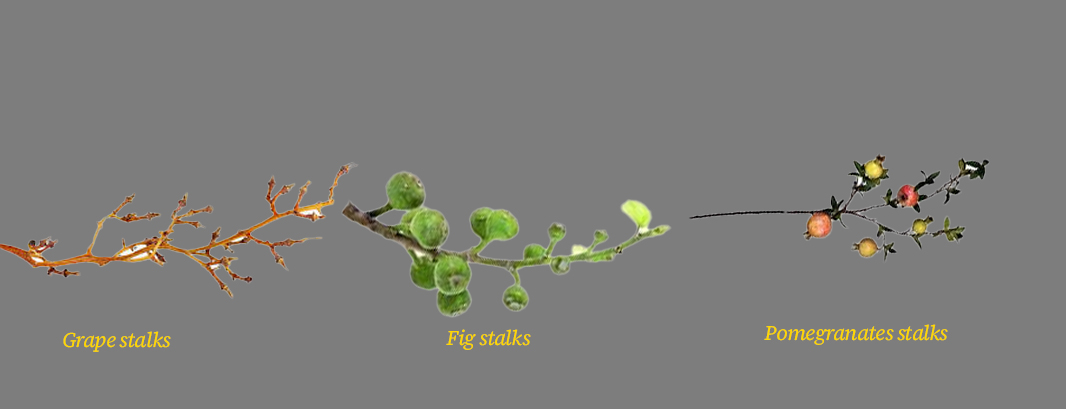
Think about it, man. Imagine you lived during that time (the Prophet’s lifetime), in the middle of the desert. When you looked up at the moon, all you saw was the moon in its place. Without NASA, camera to capture the image at one spot or anything like that, surrounded by illiterate people, little did you know that it was actually moving in that shape; dates stalk.
In the Quran, the moon is depicted with vivid and profound imagery, relatable to its audience—desert dwellers familiar only with dates (and other desert fruits).
“And the moon – We have determined for it phases, until it returns [appearing] like the old date stalk.”
Ya-Sin 36:39
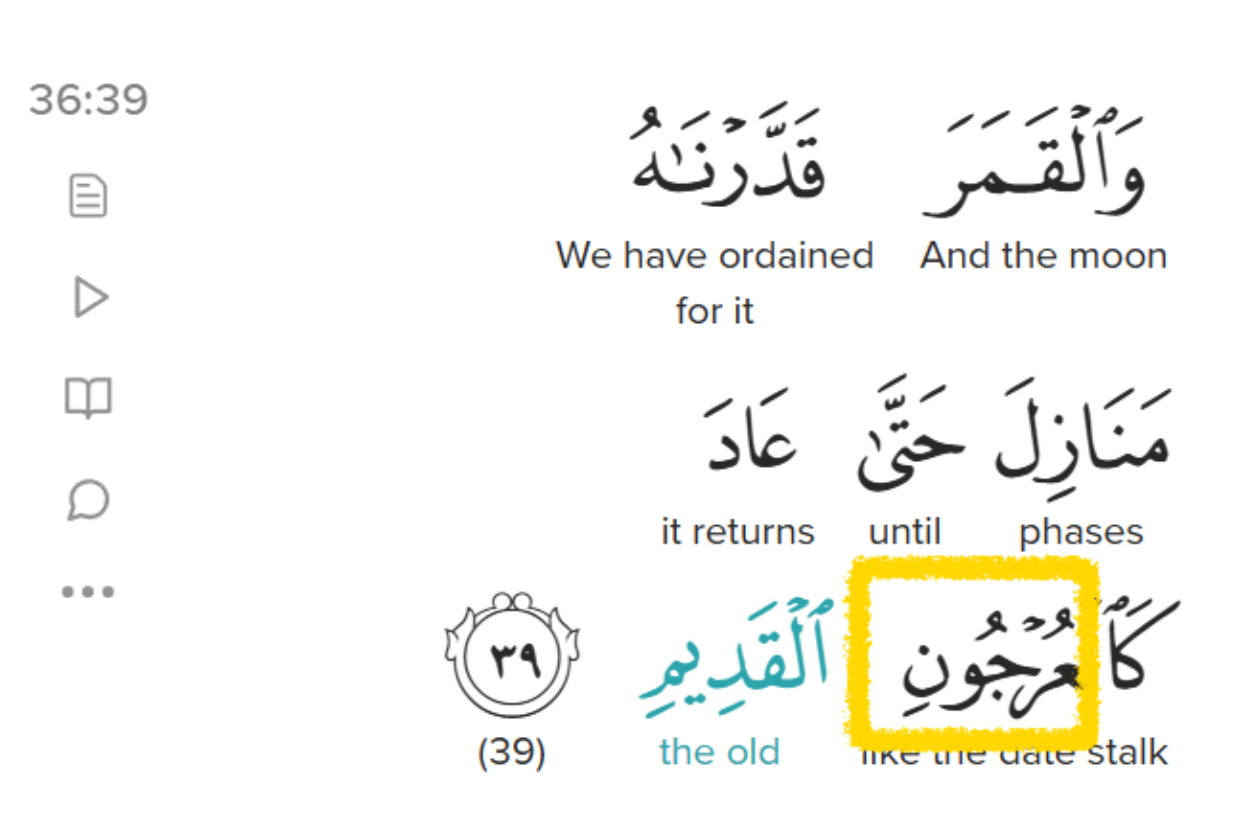
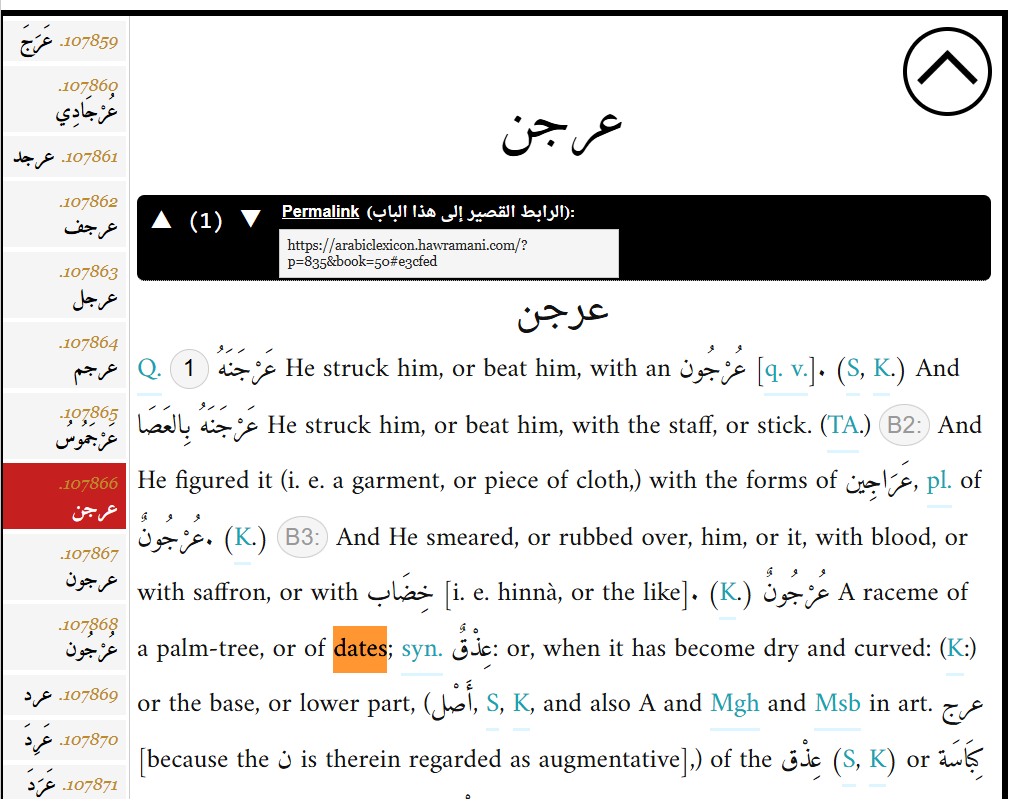
This verse presents a poetic yet scientifically accurate depiction of the moon’s phases. Its comparison to the dried, curved stalk of a date cluster offers profound insights into both the natural world and the Quran’s ability to connect with its audience through familiar and relatable metaphors.
The Celestial Date Stalk
The moon undergoes distinct phases as it orbits the Earth, transitioning from a crescent to a full moon and back again. Toward the end of its cycle, the moon appears as a thin crescent, closely resembling an old, bent date stalk. This imagery would have been instantly recognizable to the people of 7th-century Arabia, for whom date palms were an essential part of daily life to give perspective about how moon moving without the needs of NASA.
This metaphor not only serves as a visual tool but also illustrates the cycle and renewal in harmony with the moon’s monthly journey. The Quran’s choice to liken the moon’s final phase to something so specific is truly remarkable. Allah did not err in selecting another fruit stalk for comparison, demonstrating His power and the vastness of His infinite knowledge.
Symbolism of the Date Stalk
Beyond its scientific accuracy, the comparison to a date stalk carries symbolic meaning. A dried date stalk is a remnant of a once-thriving fruit-bearing tree, symbolizing decline and renewal. Similarly, the moon’s waning crescent marks the end of a cycle, only to begin anew with the next lunar month. This cyclical nature reflects themes of continuity and rebirth found throughout the Quran.
Lessons for Humanity
- Observation of Nature
- The verse invites reflection on the natural world and its intricate design. The phases of the moon, as simple as they may seem, are a testament to the precision and order of the universe.
- Time and Renewal
- Just as the moon completes its cycle, life is full of phases and transitions. The Quran encourages believers to ponder these changes, fostering a sense of humility and appreciation for divine wisdom.
- Cultural and Spiritual Connection
- By using a metaphor so deeply rooted in the lives of its initial audience, the Quran bridges the gap between the physical and spiritual realms, offering timeless lessons that remain relevant today.
Conclusion
The Quran’s comparison of the moon’s phases to an old date stalk is undeniably amazing. While the comparison may not perfectly match the moon’s shape as we see it here, no one could come up with anything better. The people of the desert might have noticed the moon’s movement, but recognizing how its phases collectively resemble a date stalk is absolutely mind-blowing. Disbelievers, skeptics, idol worshipers, and others can only mock or dismiss it. However, for them to present anything similar is far from reality.
| Linguistics | Astronomy | Biology | Entomology | Genetics | Oceanography | Geology | Physics |


 Infiniti Islam
Leave a comment