

The Myth of the Bull-Headed Allah, Petra and Mecca
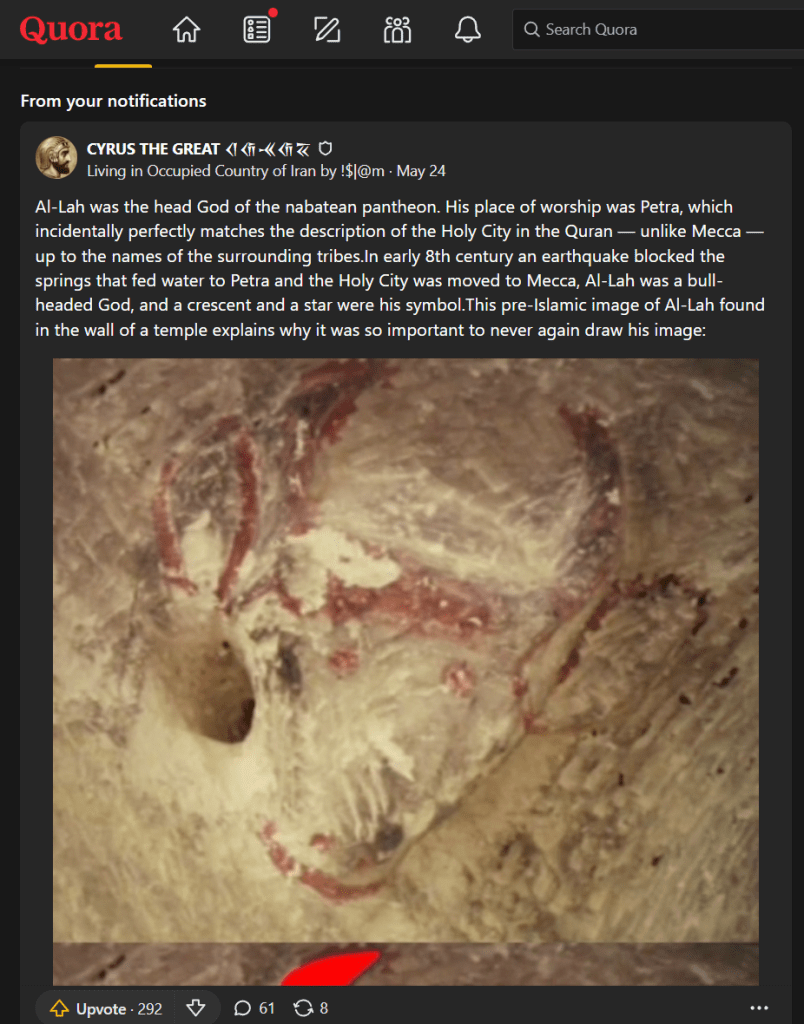
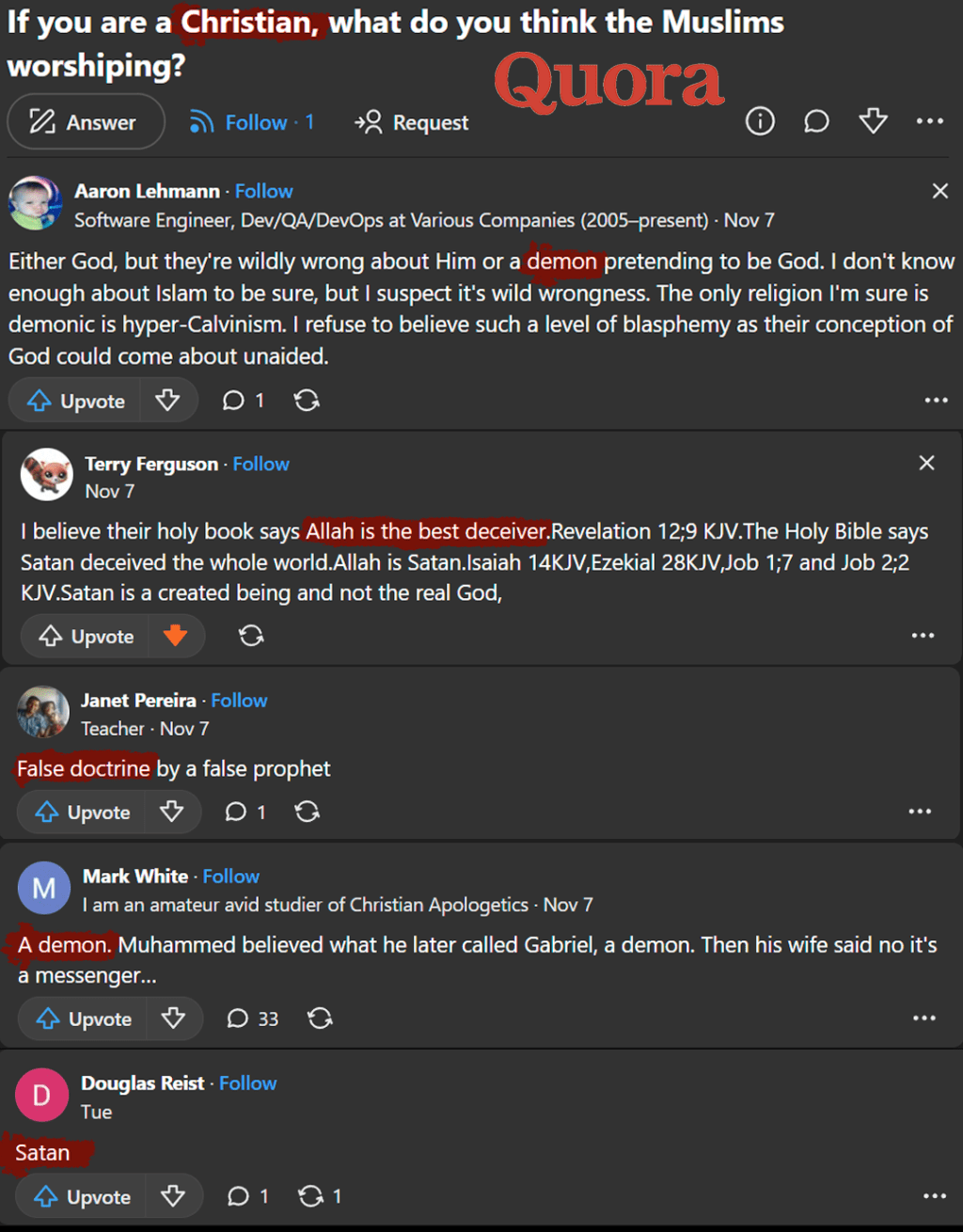
A Quora post recently made waves by asserting that Allah was originally a bull-headed deity of the Nabataean pantheon, worshipped in Petra, not Mecca. According to the post, an 8th-century earthquake redirected Petra’s water supply, forcing the “Holy City” to relocate to Mecca. The author tied this to the crescent and star symbol, claiming it originated as Al-Lah’s insignia.
It’s a provocative narrative — visually shocking, symbolically loaded, and designed to unsettle. But does it hold up under scrutiny? Let’s break it down.
Nabataean Religion: What We Actually Know
The Nabataeans, centered in Petra, had a rich pantheon. Archaeological and epigraphic evidence identifies their key deities as:
- Al-Lat, Al-‘Uzza, and Manat — Goddesses who the Pre-Islamic Arabian worshipped including in Petra. According to their believe, these are the daughters of Allah. In these references, none of of them ever mentioned that Al-lat is a bull whatsoever. [1][2][3]
- Dzu Al-Shara (Dushara) — In Safaitic inscriptions imply he was the son of the goddess Al-Lat, and that he assembled in the heavens with other deities.[4] In Classical Greek times, he was associated with Zeus because he was the chief of the Nabataean pantheon as well as with Dionysus.
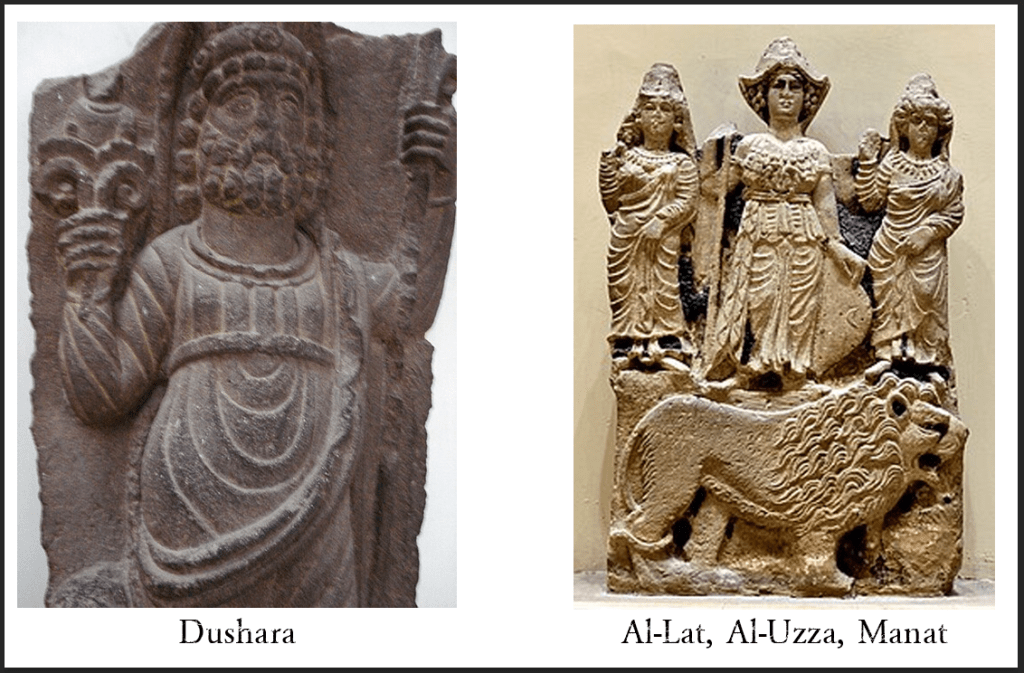
Daughters of Allah
The Qur’an in Surah An-Najm (53:19-23) explicitly addresses the pre-Islamic Arabian practice of venerating deities such as al-Lāt, al-ʿUzzā, and Manāt, known as the “daughters of Allah.” These verses emphasize that these entities have no divine authority granted by Allah, being mere names invented by people and followed only out of conjecture or wishful thinking. Allah clarifies that true guidance has already been sent from Him, rejecting any notion of divine status for these figures. This passage strongly undercuts the legitimacy of polytheistic beliefs by affirming that worship is to be directed solely to Allah, the One with ultimate authority and source of all guidance.
So have you considered al-Lāt and al-ʿUzzā? And Manāt, the third – the other one?
Surah An-Najm 53:19-20
They are not but [mere] names you have named them – you and your forefathers – for which Allāh has sent down no authority. They follow not except assumption and what [their] souls desire, and there has already come to them from their Lord guidance.
Surah An-Najm 53:23
These verses serve as a spiritual and theological critique of ancestral traditions that conflict with monotheism, reaffirming that no names or concepts other than Allah’s have any rightful claim to worship or authority. This rejection of the “daughters of Allah” calls for a return to pure monotheistic faith grounded in divine revelation, distinguishing authentic guidance from human fabrication.
The Bull-Headed Allah Claim: A Modern Projection
The Quora post’s central image, a faded bull-headed figure, is not tied to any verified Nabataean site. No archaeological report or peer-reviewed study identifies “Allah” as a bull-headed god. Meaning, this is a pure lies.
Even if it does, this is a clear case of anachronism and eisegesis:
- Eisegesis is when someone reads their own ideas into a text or artifact instead of drawing meaning from it.
- Anachronism means projecting later concepts (like the Islamic Allah or the crescent and star) onto earlier historical contexts.
Mainstream scholars such as Patricia Crone, Gerald Hawting, and Robert Hoyland, even those critical of Islamic origins, never describe Allah as a bull-headed deity. Their silence speaks volumes; the claim is modern polemic, not historical fact.
The meaning of eisegesis here refers to when some crackhead tries to force their own ideas into the image and link it to Islam, even though it has absolutely nothing to do with it.
The Crescent and Star
Islam adopted the crescent and star symbol much later in history, particularly under the Ottoman Empire around the 15th century. It was never a Qur’anic or prophetic emblem. In the early Islamic period, Muslims used simple banners which usually plain black, white, or green without any celestial imagery. The association of the crescent and star with Islam emerged through cultural and political adoption, not through revelation or religious instruction. Historically, the crescent was used in pre-Islamic Byzantium and Sassanid territories, and only became an emblem of Muslim identity when the Ottomans incorporated it into their imperial insignia.[5]
In fact, the Qur’an explicitly forbids worship of the sun and moon, making it impossible to argue that Allah is linked to lunar or astral cults:
“Among His signs are the night and the day, and the sun and the moon. Do not prostrate to the sun or to the moon, but prostrate to Allah Who created them, if it is Him you truly worship.”
Surah Fussilat (41:37)
And the Qur’an ties this rejection back to Prophet Abraham’s (Ibrahim) search for truth, where he systematically dismisses stars, the moon, and the sun as false deities:
So when the night covered him [with darkness], he saw a star. He said, “This is my lord.”1 But when it set, he said, “I like not those that set [i.e., disappear].”
And when he saw the moon rising, he said, “This is my lord.” But when it set, he said, “Unless my Lord guides me, I will surely be among the people gone astray.”
And when he saw the sun rising, he said, “This is my lord; this is greater.” But when it set, he said, “O my people, indeed I am free from what you associate with Allāh.
Indeed, I have turned my face [i.e., self] toward He who created the heavens and the earth, inclining toward truth, and I am not of those who associate others with Allāh.”
Surah Al-An’am (6:76)
So this is the hard proof that Al-Qur’an itself denounces the worship of celestial bodies in any ways of forms. Abraham, who is presented in the Qur’an as the model of true monotheism, explicitly rejects the stars, the moon, and the sun as false gods. These verses make it impossible to argue that Allah was ever a “moon god” or that Islam sanctified astral symbols.
Petra vs. Mecca: The Revisionist Theory
The Petra relocation theory originates from Dan Gibson’s book Quranic Geography (2011). In it, Gibson proposes that Islam did not begin in Mecca but in Petra, located in modern-day Jordan. His main arguments are:
- Early mosques faced Petra, not Mecca. Gibson claims that the earliest mosques built during the first century of Islam were aligned toward Petra, suggesting that it was the original qibla.
- Qur’anic descriptions of the “Holy City” fit Petra better. He argues that the Qur’an’s geographical references — such as the presence of nearby valleys, gardens, and a rocky terrain — match Petra more closely than Mecca’s desert landscape.
- A major earthquake in the 8th century forced the relocation of Islam’s center to Mecca. According to him, the city of Petra was destroyed, prompting Muslims to shift their religious focus southward.
While this theory gained viral traction among some Western audiences and online skeptics, it is overwhelmingly rejected by mainstream historians and archaeologists. Scholars point out several serious flaws in Gibson’s claims:
- The Qur’an explicitly refers to the Kaaba and Quraysh, both uniquely tied to Mecca. The Quraysh tribe was historically known to inhabit Mecca, not Petra, and early Islamic tradition consistently locates the Kaaba there.
- Muslims prayed facing the Ka‘bah, not the city of Mecca. In the 7th–9th centuries, precise geography and latitude–longitude systems didn’t exist, so the Qiblah was determined using local knowledge, sunrise and sunset positions, not exact calculations. As a result, early mosques naturally show directional variations, which were the best estimates of their time. Expecting them to align perfectly with Mecca is anachronistic and misguided.
- There is no credible archaeological or textual evidence connecting Petra to early Islamic rituals, the Prophet Muhammad, or the Quraysh tribe. Petra’s significance had already declined centuries before Islam’s rise.
- Mosque orientation data is highly contested. Many of the structures Gibson studied were built centuries after the Prophet’s time, and the inaccuracies in qibla direction can easily be explained by early surveying limitations, not by a different sacred city.
In fact, Gibson’s amateur claims have been thoroughly refuted by reputable scholars such as Professor David A. King. In his work, From Petra back to Mecca, Professor David A. King wrote:
“Another reason why mosques may be incorrectly aligned is that their qiblas were not computed from geographical data at all but were inspired by tradition. Thus, for example, mosques in the Maghrib and the Indian subcontinent generally face due east or due west, respectively.”[6]
What fascinating about his statement is the precision in qiblah direction was not required for those far from Makkah and it is acceptable in the syariah.
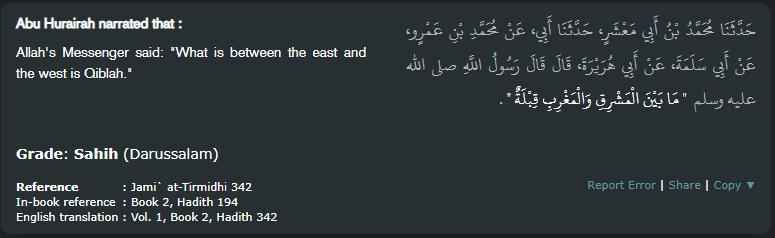
Abu Hurairah narrated that :
Allah’s Messenger said: “What is between the east and the west is Qiblah.”
This is the beauty of Islam and a blessing from Allah Subḥānahu wa Ta‘ālā — He does not burden His servants with unnecessary super precision in locating the exact position of the Ka‘bah.
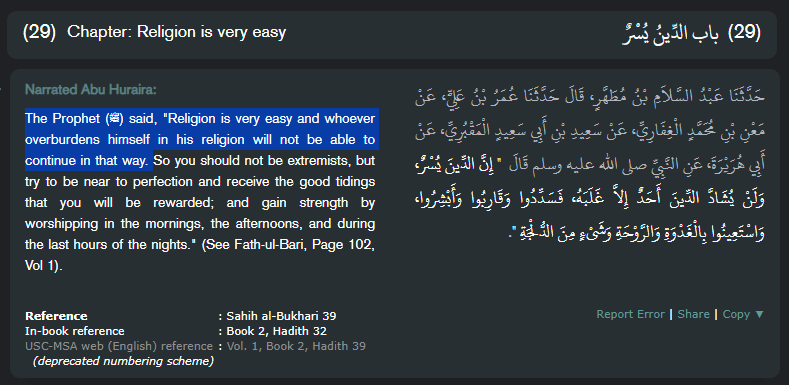
Narrated Abu Huraira:
The Prophet (ﷺ) said, “Religion is very easy and whoever overburdens himself in his religion will not be able to continue in that way.
Flooding: Makkah vs. Petra
Throughout history, Makkah has faced numerous floods, with records describing at least dozens of major inundations since pre-Islamic times. The city’s location in a valley surrounded by mountains naturally exposes it to flash floods — yet the Ka‘bah has remained in the same place for over 1,400 years. The most severe event occurred in 1630 CE (1039 AH) when a devastating flood partially destroyed the Ka‘bah’s walls. Despite this near-total collapse, the sacred structure was rebuilt immediately on its original foundation, under the order of Ottoman Sultan Murad IV.
Even during the Prophet Muhammad’s lifetime, a few years before he received revelation, Makkah experienced a powerful flash flood that severely damaged the Ka‘bah. The flood caused parts of the Kaaba’s walls to collapse and the structure was at risk of falling apart. In response, the Quraysh tribe, as the custodians of the Kaaba, decided to rebuild it. The Prophet Muhammad himself took part in this reconstruction, carrying stones and helping in the rebuilding process. Importantly, they never changed the location of the Kaaba during this rebuilding effort. This event happened around when the Prophet was 35 years old, just before the start of his prophethood.[7]
Conclusion
When we strip away the sensationalism and look at the evidence, the “bull-headed Allah” and “Petra origins” claims collapse under their own weight. There is no archaeological, textual, or historical foundation connecting the Islamic concept of Allah with any pagan idol, bull, or astral deity. The Qur’an itself explicitly denounces celestial worship and false deities, reaffirming that Allah is beyond form, image, or symbol.
The supposed “Petra relocation” myth fares no better. Dan Gibson’s theory ignores historical realities, the limitations of early surveying methods, and the continuous sacred geography of Islam. Muslims have always prayed toward the Ka‘bah, not a city. Even floods that nearly destroyed the Ka‘bah never caused its relocation. It was always rebuilt on the same foundation laid by Prophet Ibrahim (ʿalayhi as-salām). The Prophet Muhammad ﷺ himself participated in one such reconstruction before his prophethood, further proving the site’s ancient continuity and spiritual centrality.
From every angle — archaeology, scripture, and history, Islam’s narrative remains coherent: Makkah has always been the Qiblah, the Ka‘bah has always stood there, and Allah has never been represented by any image or idol. What these revisionist theories offer instead are modern fabrications dressed as discovery — imaginative conjectures that collapse under factual scrutiny.
In the end, this controversy only reaffirms a timeless truth: Islam doesn’t fear examination. The more it’s questioned, the clearer its authenticity becomes.
| Linguistics | Astronomy | Biology | Entomology | Genetics | Oceanography | Geology | Physics |
References:
- Wikipedia contributors. (2025, October 7). Al-Lāt. In Wikipedia. Retrieved from https://en.wikipedia.org/wiki/Al-Lat
- Thomas. (n.d.). The Nabataean Pantheon and Their Gods. Ancient Cultures Info. Retrieved from https://ancient-cultures.info/attachments/File/Nab_gods_article.pdf
- Surah An-Najm 53:19-20
- Wikipedia contributors. (2025, October 7). Dushara. In Wikipedia. https://en.wikipedia.org/wiki/Dushara
- The Editors of Encyclopaedia Britannica. (n.d.). Crescent (symbol). In Encyclopaedia Britannica. Retrieved October 24, 2025, from https://www.britannica.com/topic/crescent-symbol
- King, David A. “From Petra back to Mecca – From ‘Pibla’ back to Qibla.” 14 Sept 2017. Review of Dan Gibson’s Early Islamic Qiblas. Available at: https://www.mohammedamin.com/Downloads/David-King-From-Petra-back-to-Mecca-2017.pdf
- Qatar National Library. (n.d.). The architecture of the Holy Kaaba. Qatar National Library Exhibits. Retrieved October 25, 2025, from https://exhibits.qnl.qa/en/the-architecture-of-the-holy-kaaba/#:~:text=After%20floods%20from%20the%20surrounding,different%20factions%20of%20the%20Quraysh


 Infiniti Islam