

Melayu | English
Stones, Symbols, and Misconceptions
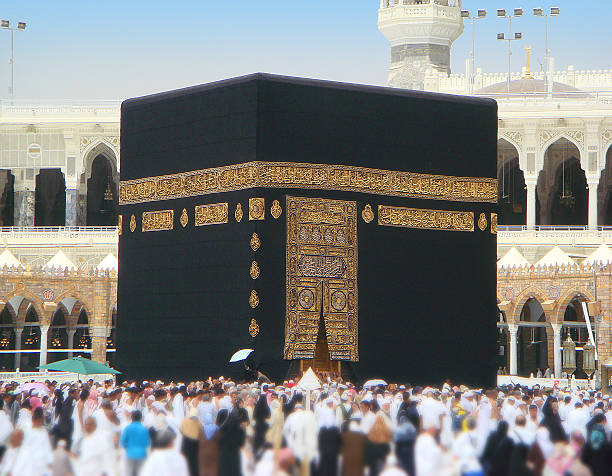
Critics often lump the Ka‘ba together with other stone objects, assuming that Muslims worship the Ka‘ba as a deity or god. This false equivalence conflates the Ka‘bah, which Muslims bow toward as a unifying direction of prayer with the Shivling, an object of worship in Hinduism. This is a fundamental misunderstanding and an oversimplification.
While both the Ka‘ba and the Shivling are stone-based, their roles, meanings, and treatment within their respective faiths are vastly different. In Islam, stone holds a functional purpose, never as an object of worship. In contrast, Hinduism, in the case of the Shivling, regards the stone as a sacred object of devotion, revered either as a deity itself or, more accurately, as an intermediary or icon representing the one true god according to their beliefs. They also believe that worshipping this object and offering prayers to it can result in their wishes being granted.
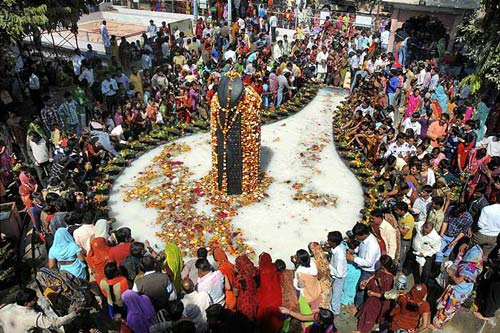
Nevertheless, in this article, we will discuss the differences between the two.
The Origins
Ka’ba
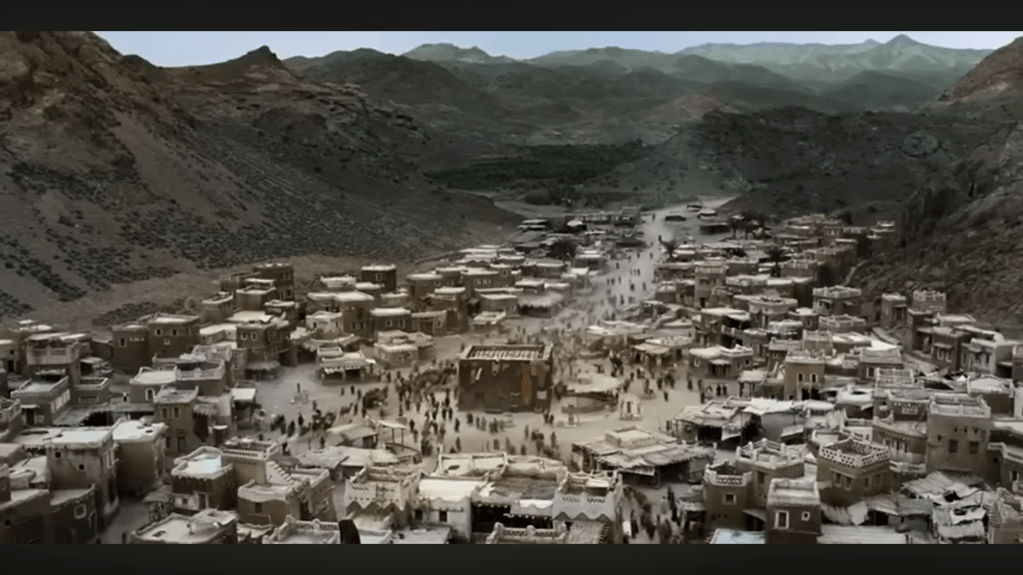
The Kaʿba is regarded in Islam as the very first House of worship established for humankind. Allah says in Al-Quran :
Indeed, the first House [of worship] established for mankind was that at Bakkah [i.e., Makkah] – blessed and a guidance for the worlds.
Surah Ali’ imran 3:96
From this verse, it is clear that the Ka‘bah is described as a house of worship, not as an icon or a representation of the divine. Islamic tradition holds that the Kaʿba was originally raised by Prophet Ibrahim (Abraham) and his son Ismail (Ishmael) in obedience to Allah’s command, in the midst of a barren land that He made into a sanctuary for worship.
And [mention] when Abraham was raising the foundations of the House and [with him] Ishmael, [saying], ‘Our Lord, accept [this] from us. Indeed, You are the Hearing, the Knowing
Surah Al‑Baqarah 2:127
A hadith narrated in Sahih al‑Bukhārī echoes this account in a lengthy narration:
….The Prophet (ﷺ) further added, “Then she drank (water) and suckled her child. The angel said to her, ‘Don’t be afraid of being neglected, for this is the House of Allah which will be built by this boy and his father, and Allah never neglects His people.’ The House (i.e. Ka`ba) at that time was on a high place resembling a hillock, and when torrents came, they flowed to its right and left.….
Thus, the origin of the Kaʿbah has nothing to do with God’s essence, BODY PARTS, or any form of intermediary, unlike the Shivling.
Shivling
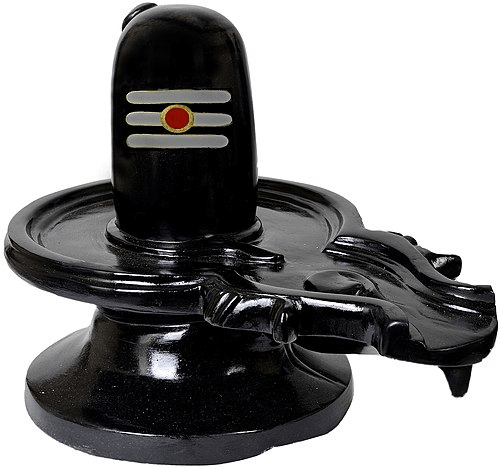
A lingam (Sanskrit: लिङ्ग IAST: liṅga, lit. “sign, symbol or mark”), sometimes referred to as linga or Shiva linga, hence this is how Shivling got it’s name. It is an abstract or aniconic representation of the Hindu god Shiva in Shaivism.[2]
That is the general information we find about this object when searching the internet on popular sites such as Wikipedia, Britannica and other websites dedicated to presenting the teachings of Hinduism. But according to their own scriptures, what does this lingam actually represent? To find the answer, we need to turn to their own sacred texts. We are going to reach Shiva Purana.
The link to the Shiva Purana that I attached above refers to Section 4, Chapter 12, which explicitly discusses “The reason for Śiva’s assuming the phallic form (liṅga)” — this is, in fact, the literal title of the chapter. The edition of the Śiva Purāṇa cited here is the English translation edited by J. L. Shastri, published in the Motilal Banarsidass series Ancient Indian Tradition and Mythology.
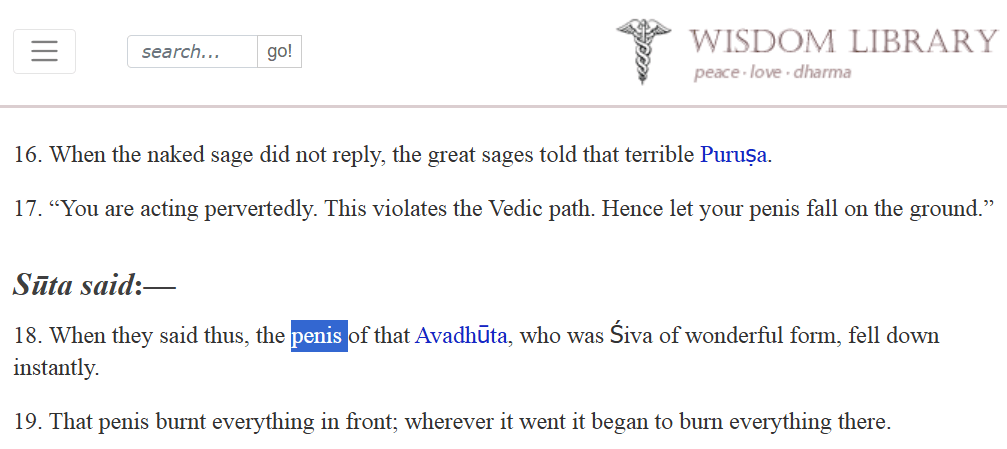
In this site, the Sanskrit text is included.

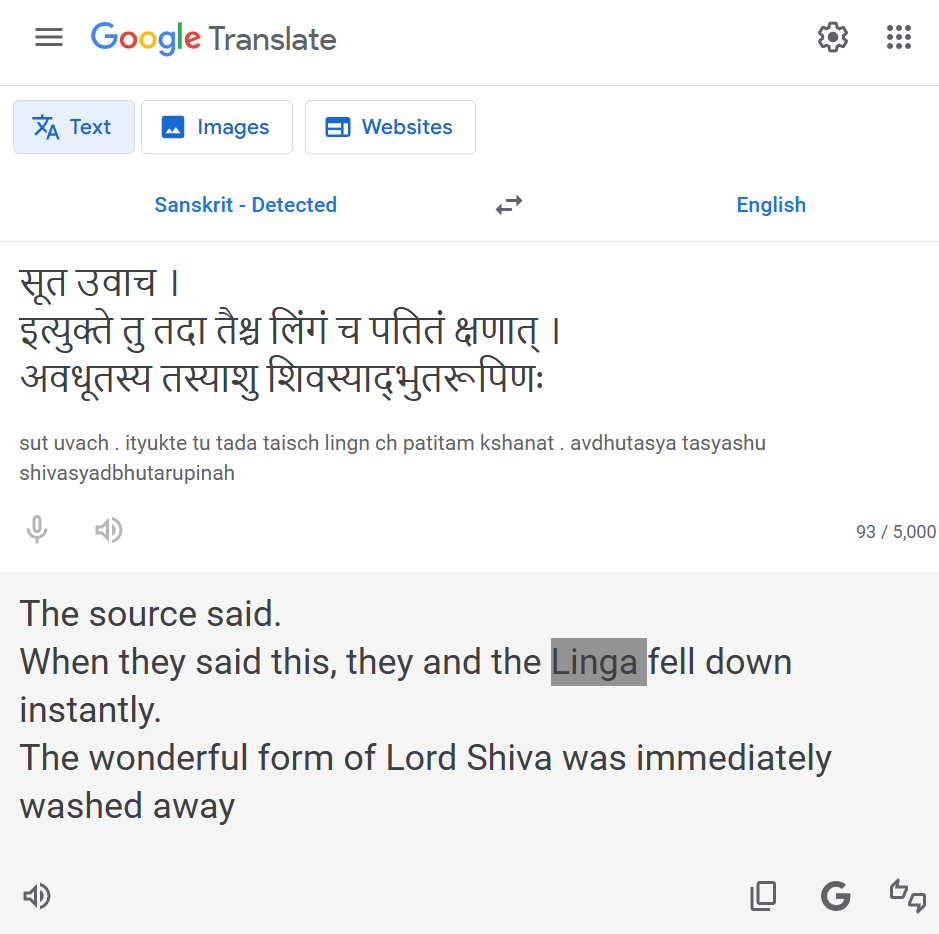
And if we look in the Google translate, it shows “linga” for the word that is match with the English translation.
If we search further, the real definition of this very word, linga is indeed means penis or phallus.
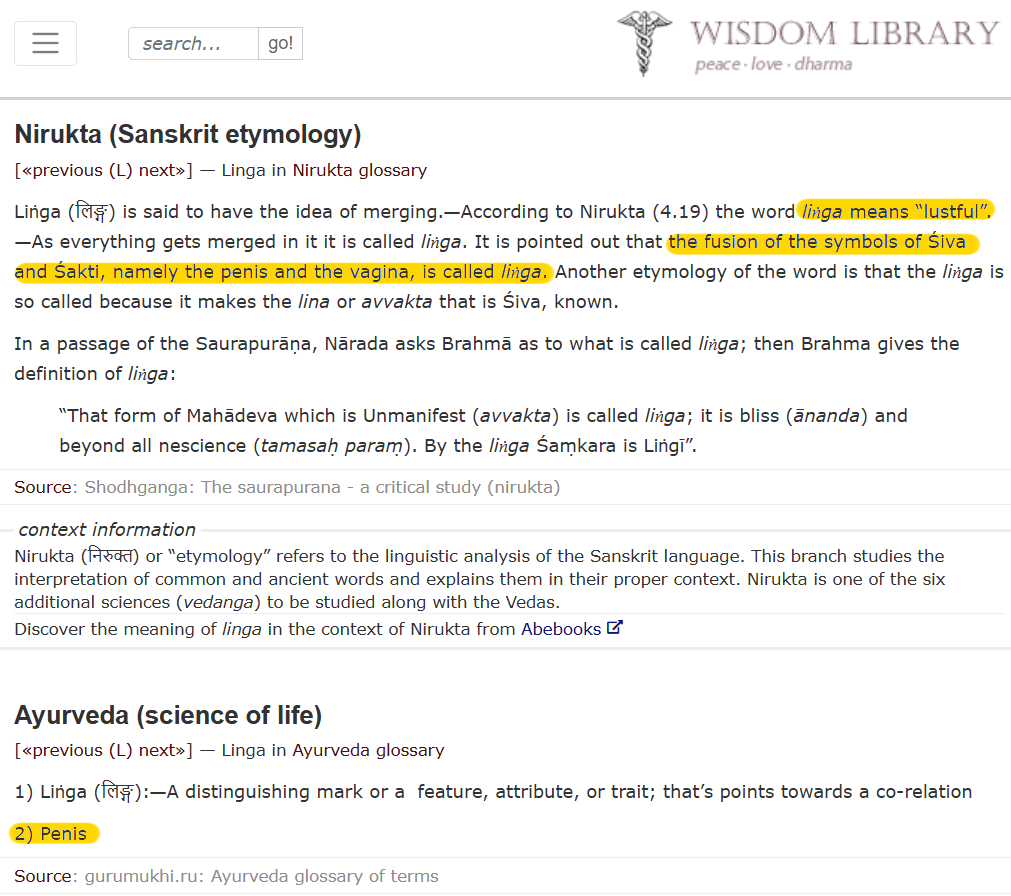
In the web, if we use the search function, we can see this very definition is everywhere in the field of knowledge in Hinduism such as Ayurvedic, Kama-shastra, Yoga and more.

These Sanskrit dictionaries also translate “linga” as penis or phallus, alongside other meanings such as “mark” or “sign.”

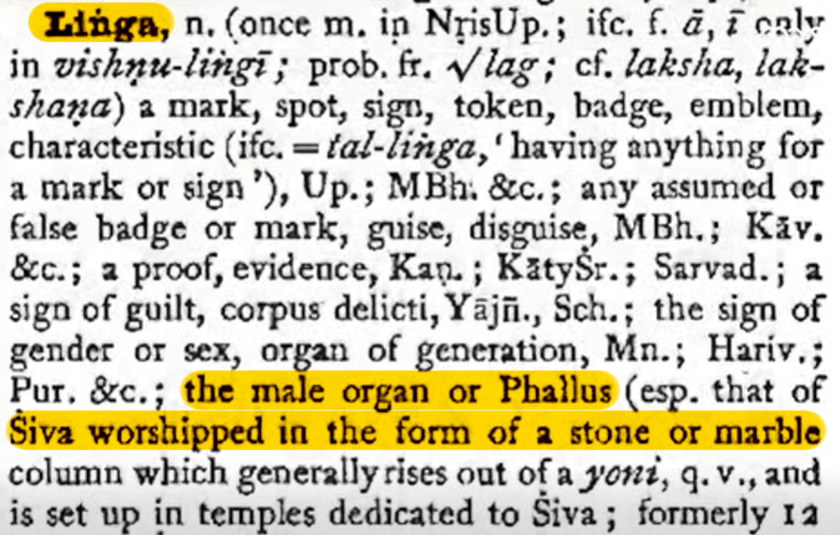
Having said that, since the Shivling literally means “Shiva Lingam,” it actually refers to Shiva’s phallus (penis).
At this point, a clear distinction can be seen. The Ka‘ba originates as a house of worship established for the One God, functioning as the qiblah, the unifying direction of prayer for Muslims. In contrast, even though the term linga in Sanskrit is often interpreted as “mark” or “sign,” in certain contexts it refers to the male generative organ (phallus), especially when we consider its etymology.
The Structure
Ka’ba
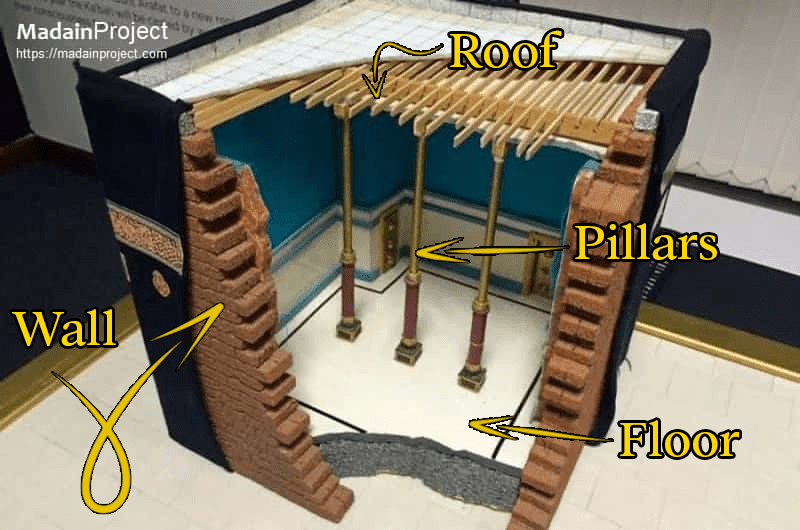
The interior of Ka’ba is relatively simple. The area of the Kaaba’s interior is about 180 square meters. This cubic structure located at the center of Masjid al-Haram. Unlike the widely recognized exterior, which is adorned with the black Kiswah (silk covering), the interior remains unseen by the vast majority of Muslims, as it is only accessible to a select few on rare occasions. The interior is simple yet deeply revered, featuring white marble walls, three wooden pillars supporting a double-layered roof, a staircase leading to the ceiling, and gold and silver hanging lanterns gifted by various Islamic rulers.
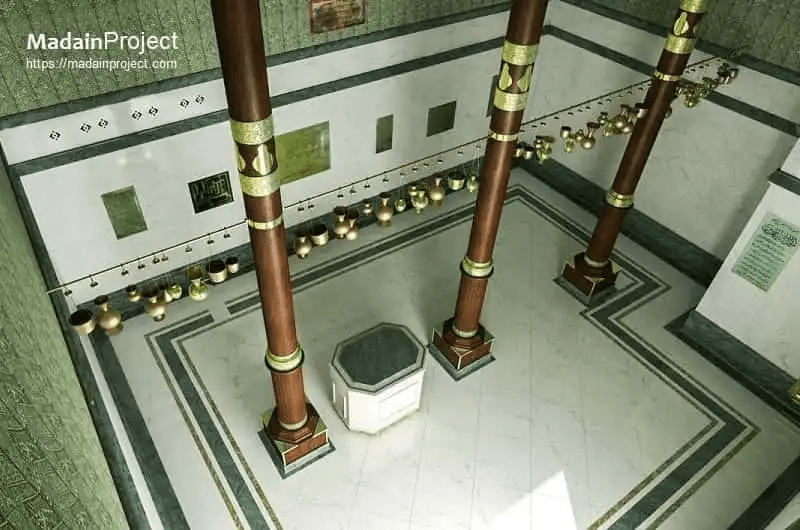
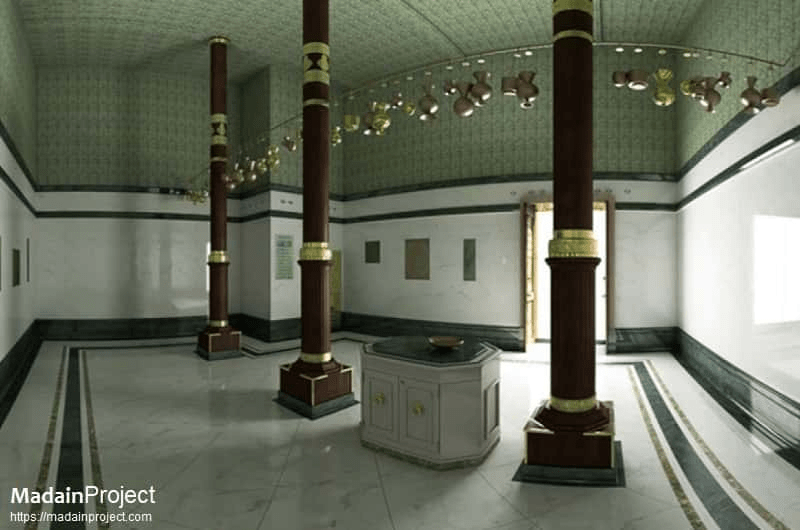
Nothing inside the Kaʿbah carries any symbolic representation. This matches the description of the structure as a ‘house,’ as mentioned in Surah Ali’ imran 3:96 above. A complete description of its design and features can be found on the website Madain Project. Please note that there is no image or object that can be described as Allah or as anything divine.
At one of the corner of the Ka’ba is what we call Hajarul Aswad.
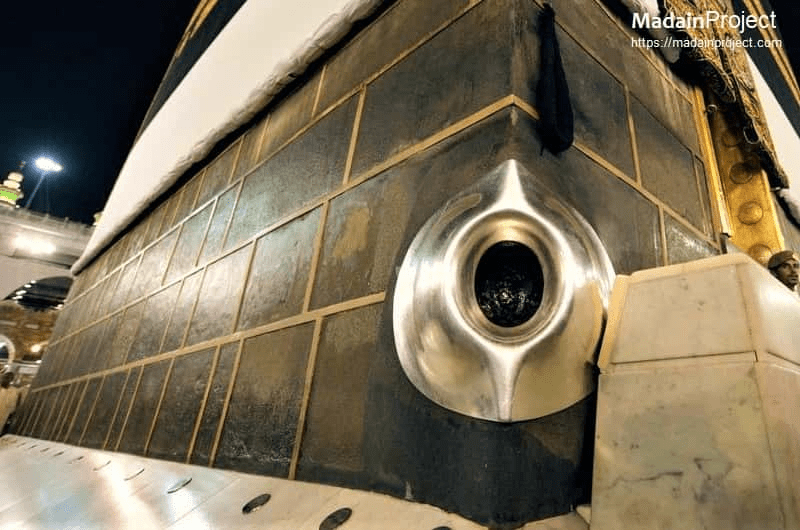
The Hajar al-Aswad literally meaning “the Black Stone”, is a revered relic set into the eastern corner of the Kaʿba in Makkah. According to Islamic tradition, it was sent down from Paradise and later placed into the Kaʿba by Prophet Ibrahim (Abraham) and his son Ismail (Ishmael) when they rebuilt the Sacred House.
Today, the Hajar al-Aswad is encased in a silver frame and positioned about 1.5 meters above the ground, marking the starting and ending point of the ṭawāf (circumambulation) performed during ḥajj and ʿumrah.
Anyone who sees this object as resembling a vagina clearly has a filthy mind or at least being delusional. Another reason for this is called apophenia, a psychological phenomenon of perceiving meaningful patterns or connections between unrelated things.[5]
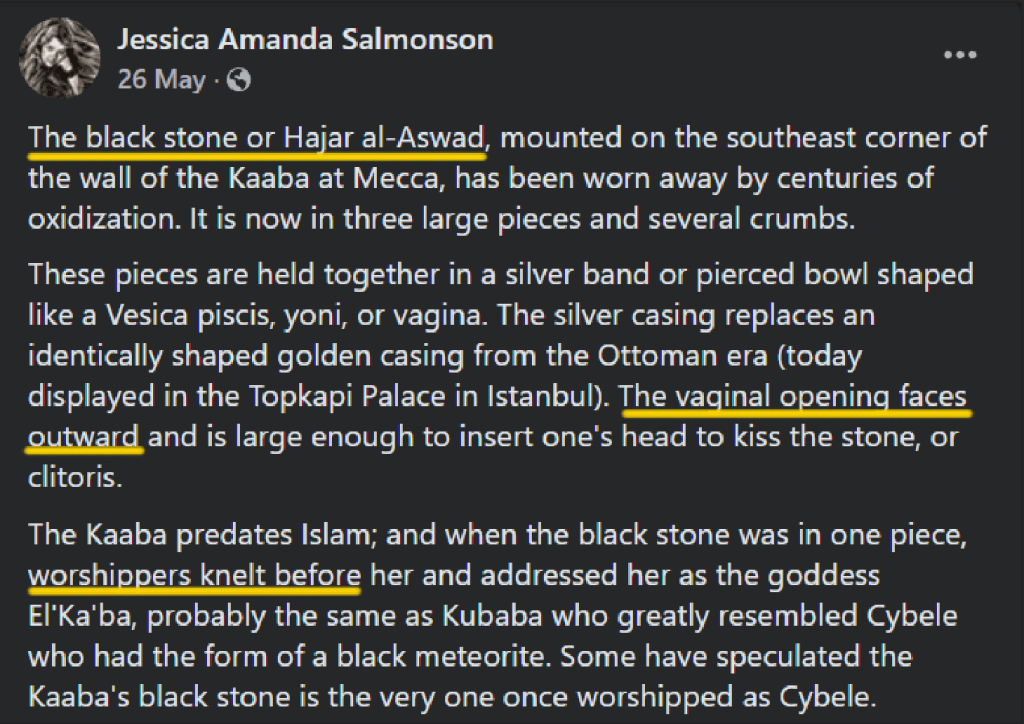
This apophenia problem doesn’t only apply to the Ka’ba or the Hajar al-Aswad, but also to other objects, even something as random as a traffic barricade!

In the case of Ka’ba, the first silver frame encasing Hajarul Aswad was reportedly added during the reign of Abdullah bin Zubayr (around 684–692 CE) after the Ka‘bah was rebuilt.
The Black Stone does not represent Allah or anything divine. It is honored as a historical relic, not as an object of worship. Any claim suggesting that the stone is a part of Allah can be easily refuted through the Science of Hadith, which meticulously examines the chain of narrators and the origins of every reported statement to determine which sayings are authentically attributed to the Prophet ﷺ and which are not.
Touching or kissing the stone is considered a Sunnah, though not obligatory, and symbolizes devotion and continuity with the tradition of the Prophets.
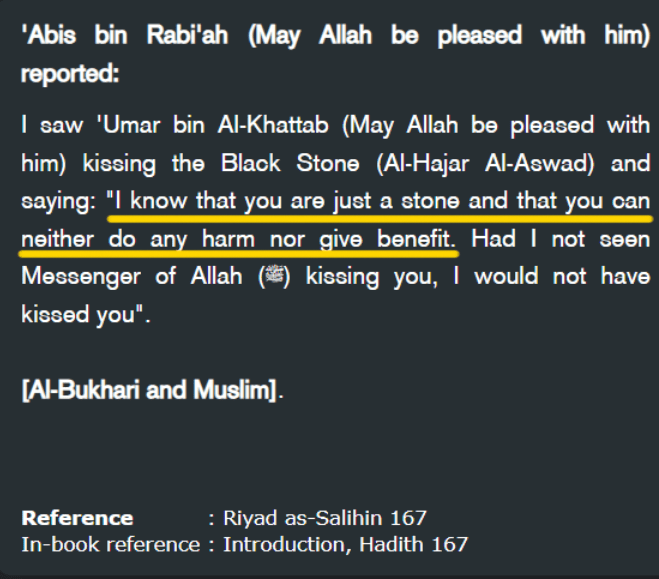
In this hadith, Sayyidina ʿUmar ibn al-Khaṭṭāb (RA) made a profound statement before kissing the Black Stone, affirming that it can neither harm nor benefit, thereby emphasizing that Muslims do not worship it but follow the Prophet’s example.
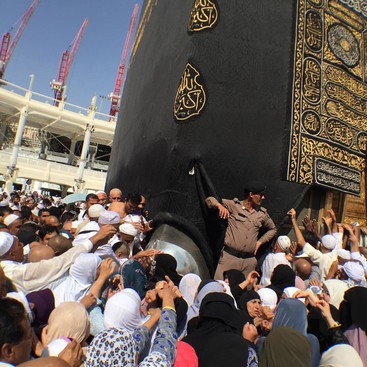
Any Muslim who tries to kiss the Hajar al-Aswad by pushing, shoving, or going to extremes, while prioritizing this act over other ibadah (forms of worship), may be acting in a way that is not in accordance with true Islamic teachings. Some muftis in Muslim world particularly Malaysia even gave fatwa that if the actions caused injury, it is considered haram.[6] Only Allah knows the real intentions and purposes within their hearts.
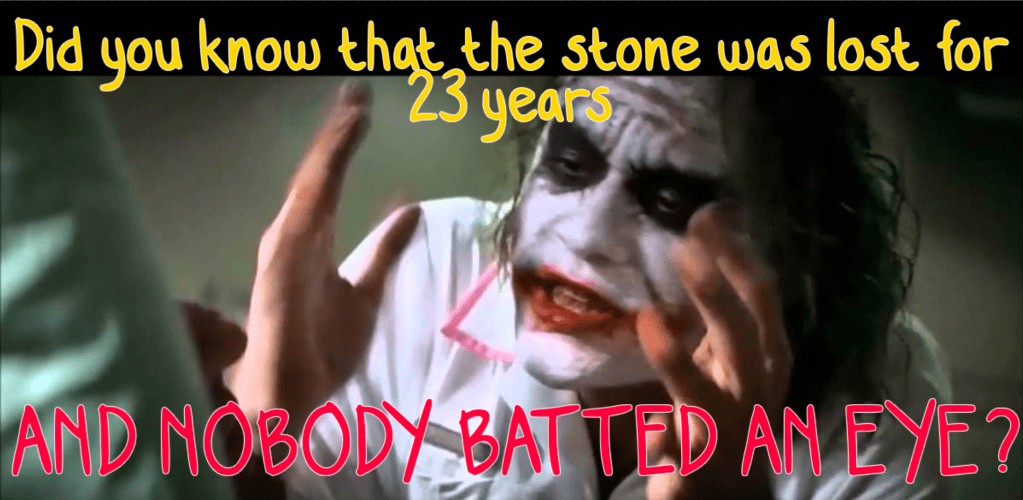
Fun fact: The Black Stone was stolen for 23 years!
In January 930 Hijri, the Qarmatians, led by their ruler Abu Tahir al-Qarmati, seized the Black Stone and transported it to their stronghold in Hajar, an area that corresponds to present-day Bahrain. Abu Tahir al-Qarmati was a prominent leader of the Qarmatian state that once dominated the historical region of Bahrain.[3][4]
Some legends even say it was held “captive” in a toilet! Whatever. Even if that’s true, the fact that nobody batted an eye over its loss during that period is the proof that, in Islam, a stone is just a stone.
Shivling
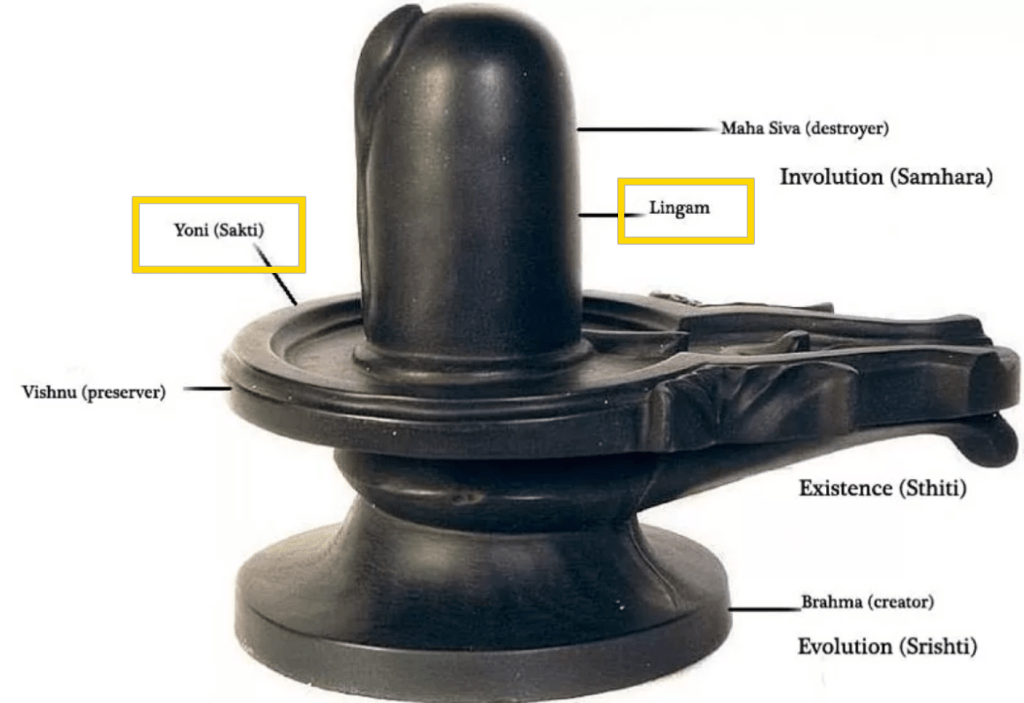
While the real definition provided in the dictionary says lingam is a phallus, many Hindu theologians emphasize its cosmic, metaphysical meaning such as a pillar of light, the union of energies, and the infinite nature of God. Both interpretations exist in academic and religious discourse.
That interpretation has made this simple structure become metaphysically sophisticated in its simplicity. Well, once something enters the realm of philosophy and fiction, it can be interpreted as almost anything.
What’s fascinating about Hinduism is how the religion has evolved. Today, they talk about how the cosmos and the universe are connected to their objects of worship. But let’s step back in time, particularly to the 2nd or 1st century at Gudimallam.

lingam or linga
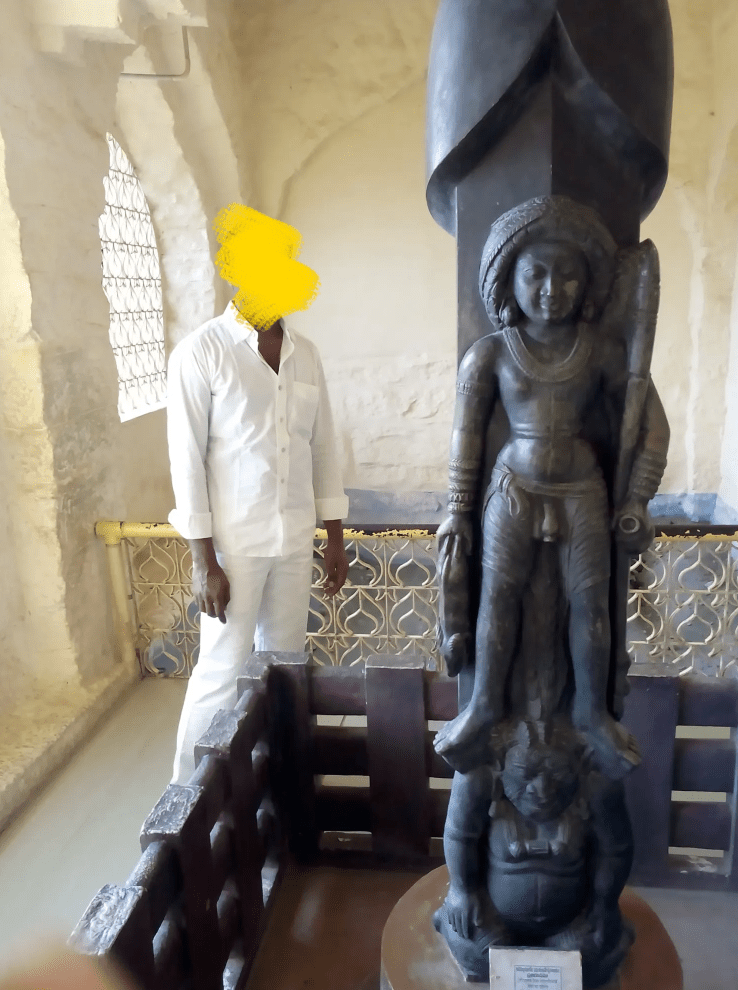
Here there is a temple featuring a peculiar structure of a linga. This is perhaps the second earliest known linga associated with Shiva discovered to date.[6]
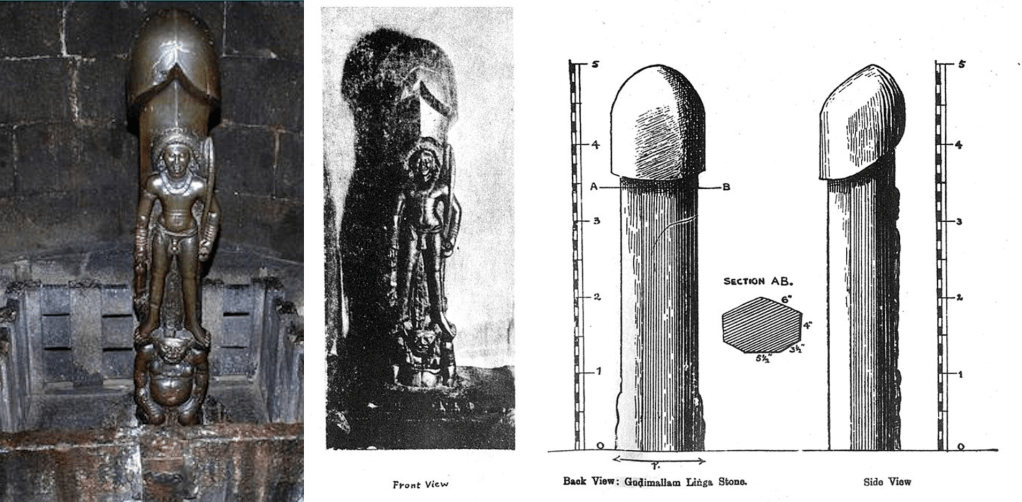
According to Harle, this is “the only sculpture of any importance” to survive from ancient South India before sculpture made under the Pallava dynasty from the 7th century AD onwards.[6] The figure on the lingam is widely identified as Lord Shiva in an early form. It is a full-standing male figure about half the height of the linga.[7]The glans penis is clearly differentiated from the shaft by being wider, with a deep slanting groove cut about a foot from the top of the Linga. This linga first came to academic attention, by his own account, after being surveyed by the archaeologist T. A. Gopinatha Rao (then working for the local princely state, later with the ASI), “some years” before he published it in 1911.
Yoni
When we look at their arguments to link their objects of worship with Islam, they use a “looks-like” methodology. If something looks similar to what they imagine, then they claim it is the same thing. That’s how they ended up worshiping a traffic barricade.
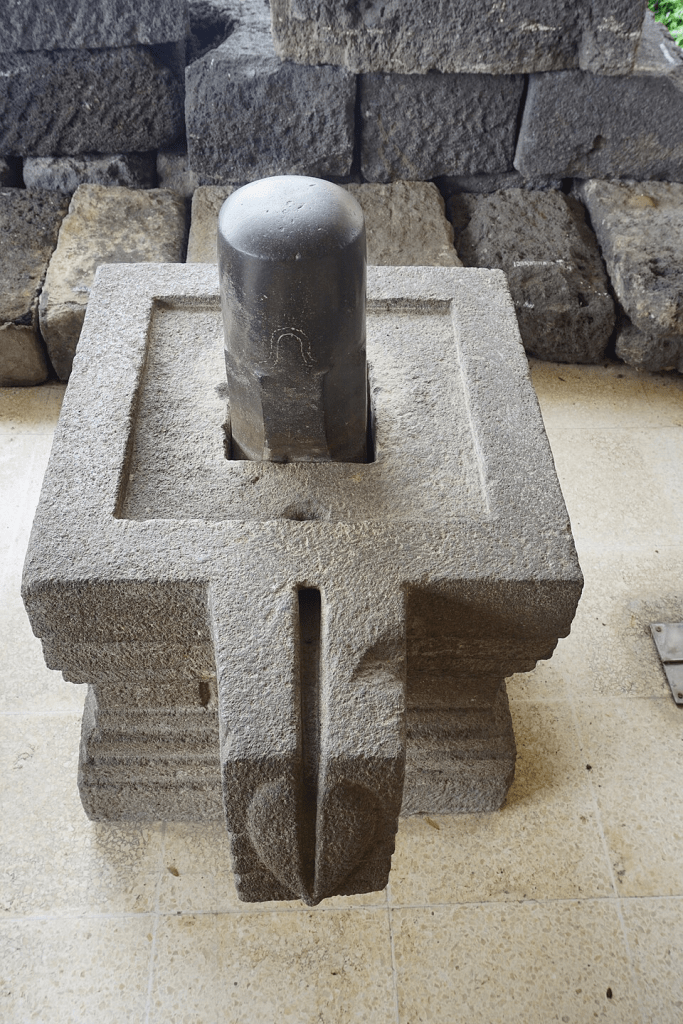
Now using their same method, this is look like a logo of a vagina with a pole at the pubic. But is that really the case? Let’s find out. Before that, let’s zoom in a little bit for another perspective.
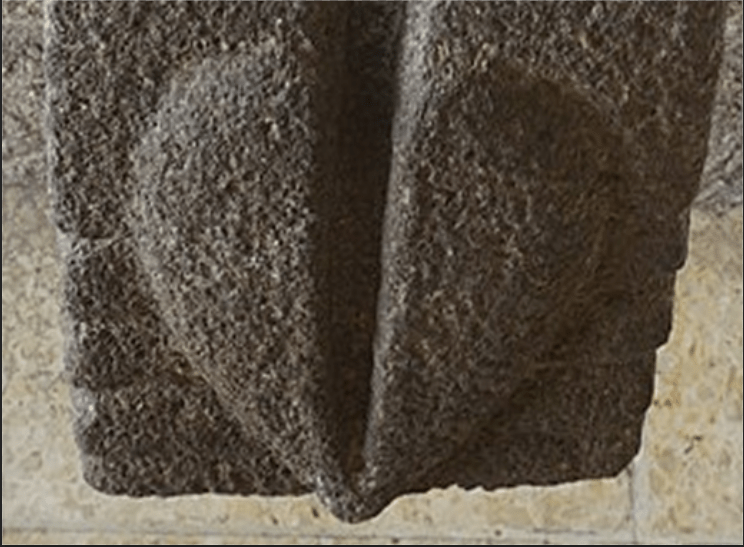
The word yoni means “holder,” “vagina,” “source,” or “womb.” According to Tantra Yoga, the yoni is the origin of life, the source of the Universe. It is associated with prakriti (the Universal Substance). In Hinduism, the yoni is a symbol of Shakti (the creative force that moves the Universe). The graphic symbol of the yoni is an inverted triangle—the three sides of which represent the gunas (the basic modalities of Nature).[8]
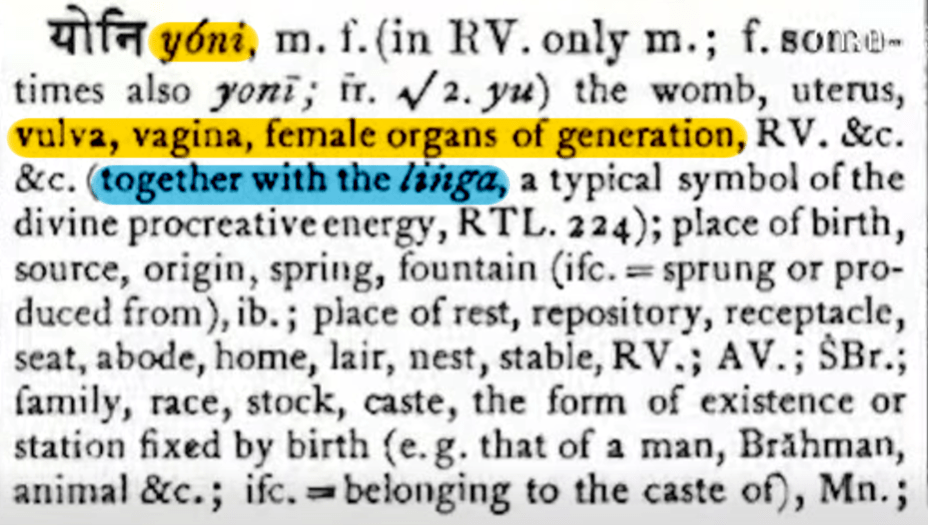
Having presented these, the reality of the Shivling or Shiva Lingam is that the lingam represents Shiva’s penis, while the yoni represents the vagina that emerged to calm Shiva’s fallen phallus, according to the Shiva Purana passage mentioned earlier. The yoni appeared as a manifestation of feminine energy, derived from the essence of Shiva’s late wife, Sati (Shakti).
So, when discussing their structural differences, the Ka‘ba is a house of worship with a simple, cube-shaped design, whereas the Shiva Lingam represents something far more complex — an intertwining of mythological narratives about Shiva’s fallen body part and the fusion of masculine and feminine energies believed to create the universe.
The Treatment
Ka’ba
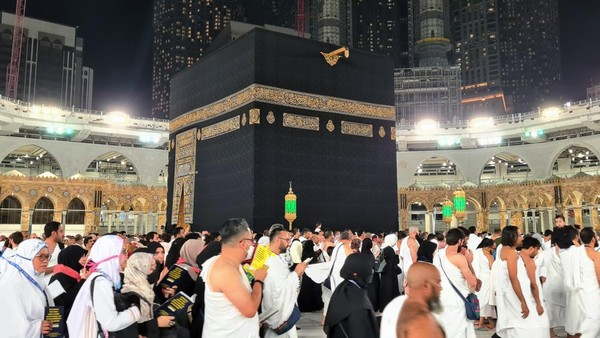
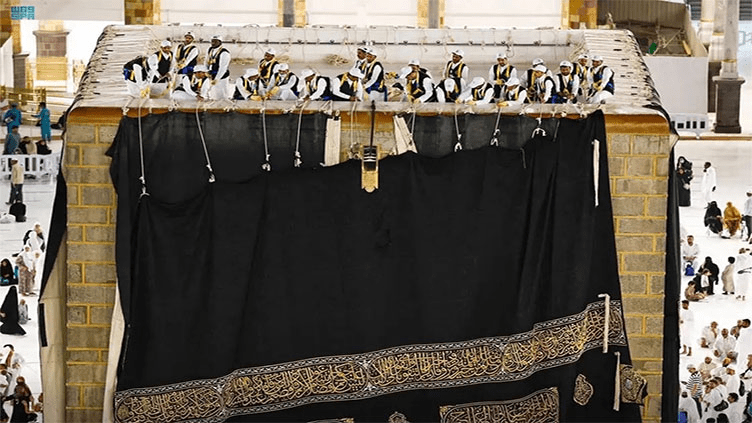
Since the Ka‘ba is merely a rock structure and does not represent Allah or anything divine, it has never been treated in an excessive-special way like how Hindus treat their Shiva Lingam.

Shivling / Shiva Lingam
According to Hinduism tenet, depending on which school of thought they follow, Shivling is revered as representation of Lord Shiva. Hence, this is what happens:
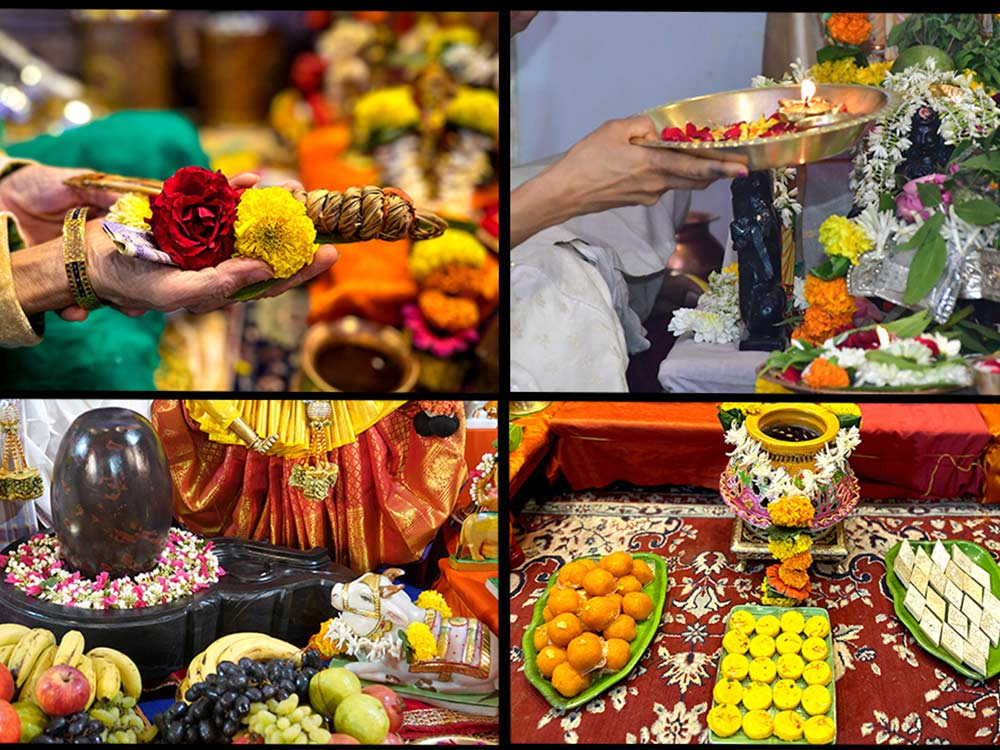
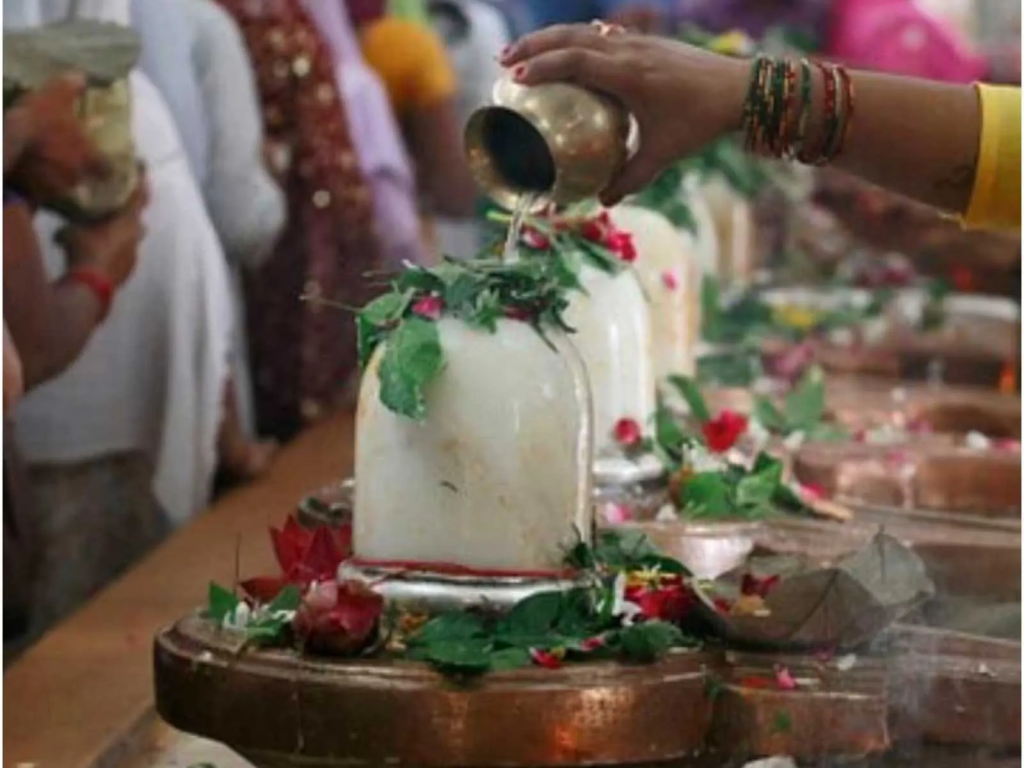
In a meanwhile:
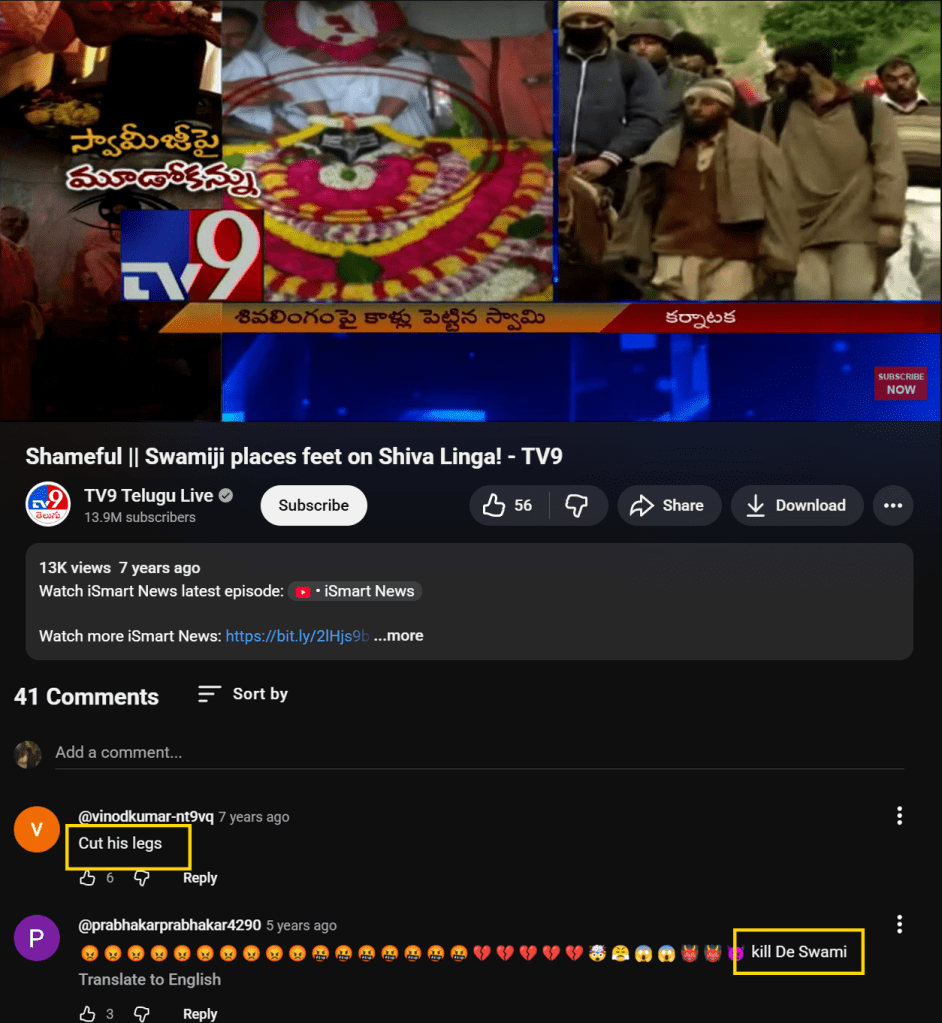
Looking at the treatment and the differences on how we treat the rock, it’s very clear that in Islam a rock is a rock, a stone is a stone while in Hinduism any rock can be the representative of god.
Conclusion
The Ka‘ba and the Shivling stand worlds apart, historically, theologically, and etymologically. The Ka‘ba is a house of worship, rebuilt by Prophet Ibrahim (AS) and his son Ismail (AS), serving as a direction of unity for Muslims, not an object of devotion. The Shivling, on the other hand, is a representation of Shiva himself, worshipped as a divine embodiment.
Their treatment reflects this distinction. Muslims neither feed, decorate, nor pray to the Ka‘ba. It is a structure of symbolic unity, not divinity. Meanwhile, the Shivling is ritually bathed, offered food, and adorned in acts of direct worship.
Attempting to equate them through the “looks-like” or apophenic approach is not only unwise but also intellectually lazy. Resemblance does not imply relation, especially when each carries an entirely different origin, function, and theology.
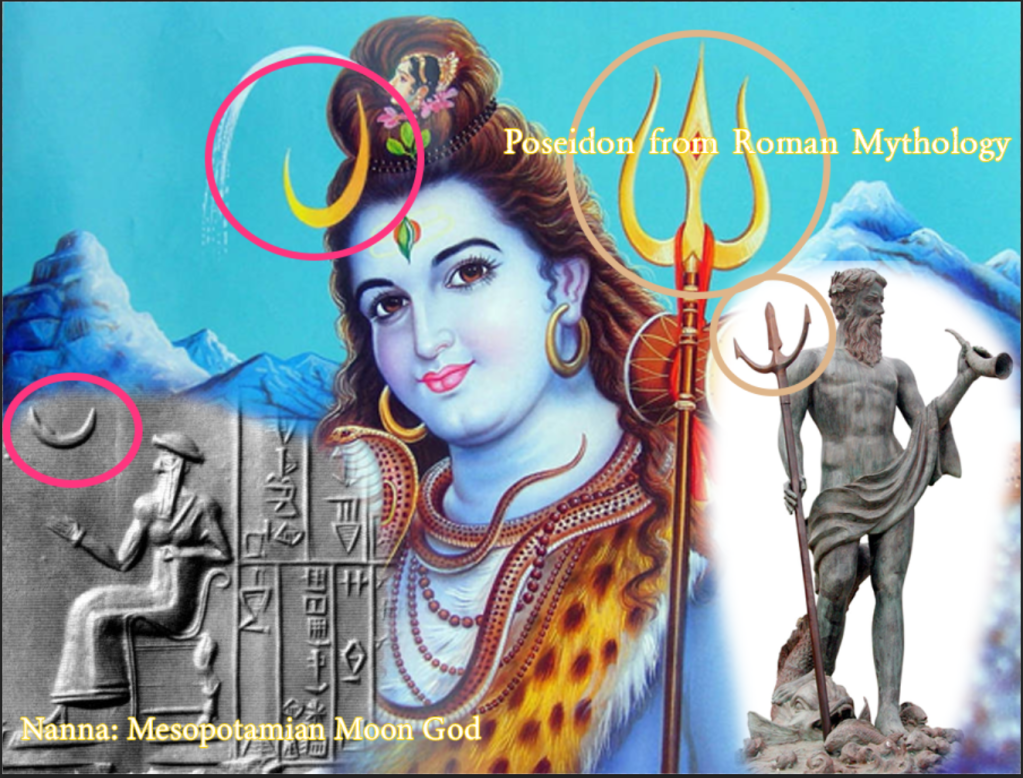
If such flawed reasoning were applied consistently, then one might claim that Shiva’s trident (Trishula) was copied from Hellenistic depictions of Poseidon’s trident, or that the crescent moon associated with Shiva was borrowed from Mesopotamian and Greco-Roman symbolism, both of which predate classical Hindu iconography.
In short, the Ka‘ba is not a Shivling, and Islam’s monotheism stands untouched by superficial parallels. To make sense of truth, one must study history, language, and theology, not just what “looks alike.”
| Linguistics | Astronomy | Biology | Entomology | Genetics | Oceanography | Geology | Physics |
References:
- Sunnah.com. (n.d.). Şahīh al-Bukhārī 3364 – Book of Prophets (Kitāb al-Anbiyā’). Retrieved October 25, 2025, from https://sunnah.com/bukhari:3364
- Encyclopædia Britannica. (n.d.). Lingam. In Wikipedia. Retrieved October 25, 2025, from Here’s how you can cite that source in APA 7th edition style, bro:
- About Islam. (2024, May 2). How was the Black Stone stolen from Makkah? Retrieved from https://aboutislam.net/reading-islam/understanding-islam/black-stone-stolen-makkah/
- Islamic Landmarks. (n.d.). Hajr al-Aswad (the Black Stone) – Makkah Haram Sharief. Retrieved from https://www.islamiclandmarks.com/makkah-haram-sharief/hajar-al-aswad
- Rogers, K. (n.d.). Apophenia — Description, forms, gambler’s fallacy, & intervention. In Encyclopædia Britannica. Retrieved October 27, 2025, from https://www.britannica.com/topic/apophenia
- Wikipedia. (n.d.). Gudimallam Lingam. In Wikipedia. Retrieved October 27, 2025, from https://en.wikipedia.org/wiki/Gudimallam_Lingam
- Indian Templess. (2025, June 27). Gudimallam temple: Home to the world’s oldest Shiva Linga. IndianTempless.in. https://indiantempless.in/2025/06/27/gudimallam-temple-home-to-the-worlds-oldest-shiva-linga/
- Hridaya Yoga. (n.d.). Yoni — Sacred Source. Retrieved from https://hridaya-yoga.com/yoni-sacred-source/


 Infiniti Islam