


Reality
As the war in Gaza rages on, we see devastating scenes not only of Muslim civilians killed, but also of Christians where churches bombed, Christian homes destroyed, and communities caught in the cross-fire. Yet, paradoxically, many Christian Evangelical leaders in the U.S. remain unequivocal in their support for Israel, and American political leaders like Donald Trump continue to maintain steadfast backing. Why is this? What drives a country whose professed values include religious freedom and human rights to back a nation whose military operations are killing people of many faiths, including Christians?
Something deeper is at play: the merging of theology, politics and foreign policy, namely the rise of what is called Christian Zionism.
A Strange Alliance: U.S., Israel and Evangelical Christianity
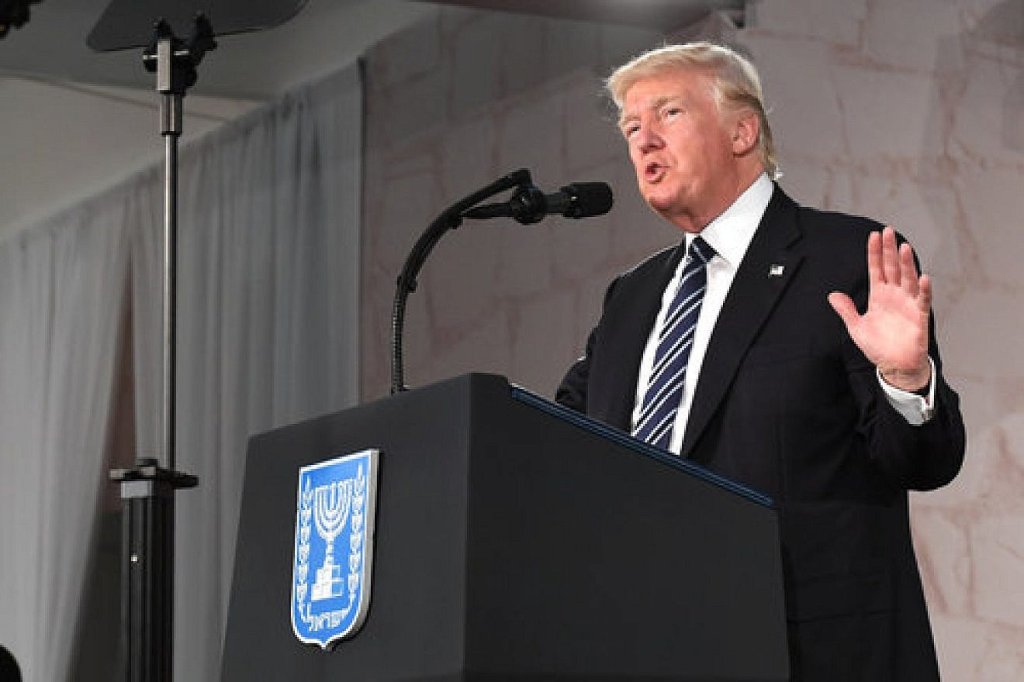
When the State of Israel was established in 1948, the United States quickly became its biggest external supporter. Over subsequent decades, Washington provided military aid, diplomatic cover at the UN and strategic backing.[1] But why did the U.S., a largely Christian nation, become so involved in a Jewish-majority state? Part of the answer lies in the influence of Evangelical Protestantism in America.
Research shows that support for Israel among Evangelicals is significantly driven by theological beliefs: literal reading of Scripture, eschatology (the study of end-times) and the conviction that the return of the Jewish people to the land of Israel is a precursor to the Second Coming of Christ.[2] In a survey of U.S. evangelicals, the strongest predictors of support for Israel were age (older respondents), opinion of Jews and “socialization” (how much one heard other evangelicals talking about Israel) with theology underlying many of these responses. [3]
The Encyclopaedia Britannica describes Christian Zionism as a movement that “supports the return of the Jewish Diaspora to a homeland in Palestine as a prerequisite for the end-time and the Second Coming of the messiah.”[4]
This helps explain U.S. policy choices. If a large voting bloc which is Evangelical Christians believe Israel’s existence is divinely ordained and that supporting Israel brings earthly and heavenly blessings, then American politicians will listen. According to JNS, more U.S. Christians backed Trump’s 2017 U.S. embassy move to Jerusalem (to 60%+) than American Jews did. [5]
And organisations like Christians United for Israel (CUFI), founded by Evangelical leader John Hagee in 2006, claim millions of U.S. Christian members active in pro-Israel advocacy. [6]
How Theology and Zionism Converged

The roots of Christian Zionism go back centuries, but it became especially important in the 19th and 20th centuries. Since the Protestant Reformation, some Christians began to read the Bible in new ways, anticipating a literal fulfilment of prophecy. For instance, the belief that God said to Abraham in Genesis 12:
“I will bless those who bless you…”
Genesis 12:3
The verse was interpreted to mean that Christians must bless Israel (i.e., the Jewish people and the land) in order to be blessed.[4]
The doctrine of dispensationalism which is a theological system popularised by Irish “brethren” preacher John Nelson Darby and later in America via the Scofield Reference Bible held that history proceeds in distinct “dispensations” and that the final dispensation would involve Jews in the land of Israel, the rebuilding of the Temple and the return of Christ. [7]
At the same time, Jewish-secular Zionism (led by figures like Theodor Herzl in the late 19th century) developed as a nationalist movement for a Jewish homeland. While Herzl’s movement was mostly secular, the convergence of Christian Zionists and Jewish Zionists created a powerful alliance: one theological, one political—but sharing a common goal of establishing, maintaining and supporting Israel.
So by the mid-20th century, the modern State of Israel benefitted not just from Jewish diaspora activism, but also from a Christian Evangelical constituency in the U.S. whose theology translated into political action and financial support.
The Paradox: Christian Lives Lost in Gaza, Christian Support for Israel

Now we return to the war in Gaza. The humanitarian cost is enormous. Among the victims are Palestinian Christians. Their homes, churches and lives are affected by the conflict too. Yet, on the U.S. side, the narrative remains overwhelmingly pro-Israel. Why this disconnect?
Because for many Evangelicals, Israel is not just a country. It is part of a divine plan. The moral calculus is: support Israel, and you fulfil prophecy; oppose it, and you thwart God’s plan.
Therefore, the suffering of Palestinian Christians may be overshadowed in this framework by the larger eschatological narrative. The value placed on Israel’s existential survival and religious symbolism takes precedence.
Research shows support among younger evangelicals is waning, though: in one poll support dropped from 68% in 2018 to 34% in 2021 among 18-29-year-olds.
Why It Matters for U.S. Foreign Policy

When theological belief, mass political mobilisation and strategic interest align, you get lasting policy. The U.S. repeatedly vetoes UN resolutions critical of Israel, sends billions in military aid and frames Israel as a strategic and moral ally. The theological lens adds another layer.
For instance, the decision to move the U.S. embassy to Jerusalem in 2017 under Trump was not only geopolitical but also resonated with Evangelical prophecy. Many U.S. pastors and Christian leaders praised it as a “fulfilment of prophecy.”
By understanding this religious dimension, we see not just a strategic partnership but a deep ideological commitment that transcends ordinary realpolitik.
Conclusion

So when we look at Gaza and see Christian Palestinians caught in the crossfire, with U.S. Evangelical-influenced politicians still backing Israel wholeheartedly, the bewilderment is valid. It forces us to ask: Who influences these policies? What narratives drive them? What voices remain unheard?
The alliance between U.S. Evangelicals and Israel is more than shared strategic interest. It is rooted in a theology that sees Israel’s existence and future as part of God’s unfolding plan. Understanding this helps explain why support persists even in the face of human suffering that includes Christians.
This in fact a tragic contradiction. A religion that preaches peace, love, and turning the other cheek has, in some circles, built its theological backbone on the displacement and oppression of another people. The idea that divine prophecy justifies the creation of a state through violence and exclusion undermines the very ethics it claims to uphold.
The lines between faith, politics and foreign policy have merged. If you want to understand U.S. behavior in the Middle East today, you cannot ignore the power of Christian Zionism.
References:
- U.S. Department of State. (2025, April 25). U.S. security cooperation with Israel. U.S. Department of State. https://www.state.gov/u-s-security-cooperation-with-israel/
- Crosstalk.ai. (n.d.). How do different Christian groups interpret the Second Coming? Crosstalk.ai. https://crosstalk.ai/knowledgebase/theological-concepts/eschatology/how-do-different-christian-groups-interpret-second-coming/
- Inbari, M., Bumin, K. M., & Byrd, M. G. (2020). Why do evangelicals support Israel? Politics and Religion. https://doi.org/10.1017/S175504831900052X
- Comstock, F. (n.d.). Christian Zionism. Encyclopaedia Britannica. https://www.britannica.com/topic/Christian-Zionism
- JNS. (2017, December 6). Trump, often polarizing, draws broad Jewish and Christian support on Jerusalem. Jewish News Syndicate. https://www.jns.org/trump-often-polarizing-draws-broad-jewish-and-christian-support-on-jerusalem/
- Jewish Virtual Library. (n.d.). Christians United for Israel (CUFI). Retrieved November 5, 2025, from https://www.jewishvirtuallibrary.org/christians-united-for-israel-cufi
- Ligonier Ministries. (n.d.). Dispensationalism. Retrieved November 5, 2025, from https://learn.ligonier.org/guides/dispensationalism



 Infiniti Islam