

Introduction
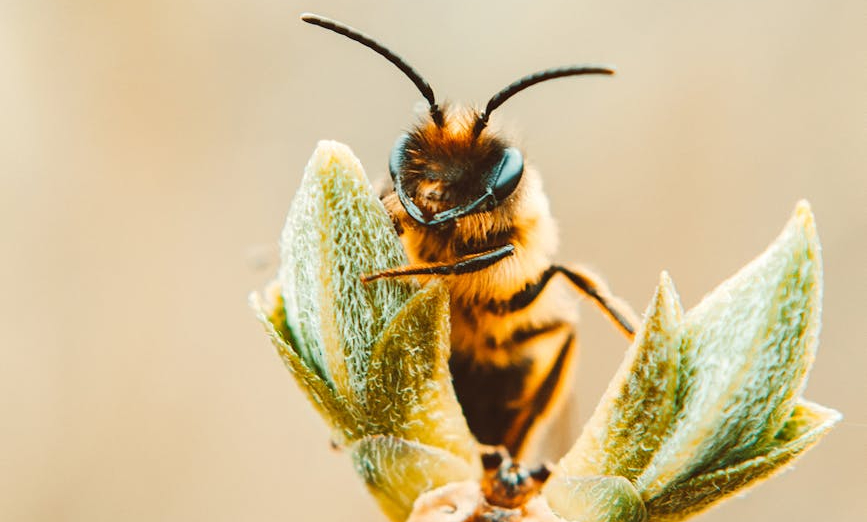
A video once went viral where an American girl expressed her admiration for a surah in the Quran. That surah is An-Nahl, which talks about bees. Bees are incredibly important and fascinating creatures. That is why the Quran dedicates an entire chapter to bees, named An-Nahl, which means “The Bee.”
There is wisdom to be pondered here. Why did Allah dedicate a specific surah solely to bees, highlighting their importance, just as Surah Al-Baqarah, meaning “The Cow,” emphasizes the cow?
Bees are extraordinary creatures that play a vital role in the ecosystem. In the Quran, Surah An-Nahl, meaning “The Bee,” illustrates the marvels of Allah’s creation and the importance of bees in life. This surah emphasizes the need for reflection by comparing the hardworking life of bees, which benefits humanity, to our daily lives where we toil to provide for our families.
When we delve into this surah, we can uncover several remarkable elements about bees that deserve our attention.
Inspiration

This surah describes the way bees live and how Muslims should emulate them. The Quran states that Allah inspired the bees:
“And your Lord inspired the bee, saying, ‘Take for yourself among the mountains, houses, and among the trees and [in] that which they construct.’”
(Surah An-Nahl 16:68)
Bees have been inspired to build their homes in mountains, trees, and human-made structures without any technical or engineering skills. Scientists have recognized bee constructions as incredibly ingenious and efficient.
The word used to refer to this inspiration is “wahy” (revelation), as interpreted by Ibn Kathir’s tafsir. This indicates that honeybees are special among the non-human creations of Allah, the Exalted.
The lesson we can draw from this verse is that when Allah commands something, we should obey because there is wisdom in His every command, as Allah is the Most Wise.
The Miracle of Number 16
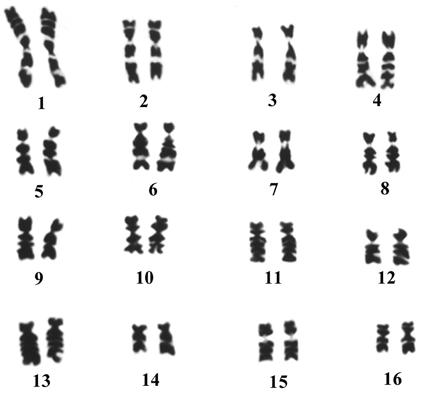
Allah also provides an astonishing clue in this surah. There is something intriguing about the connection between the number 16 and bees.
For your information, Surah An-Nahl is the 16th chapter of the Quran.
Female bees have 16 pairs of chromosomes, while male bees have only 16 chromosomes.
The number of chromosomes in bees aligns perfectly with the surah’s position in the Quran. This cannot be a coincidence but is undoubtedly by the design and decree of Allah, the Almighty and All-Wise.
Colony
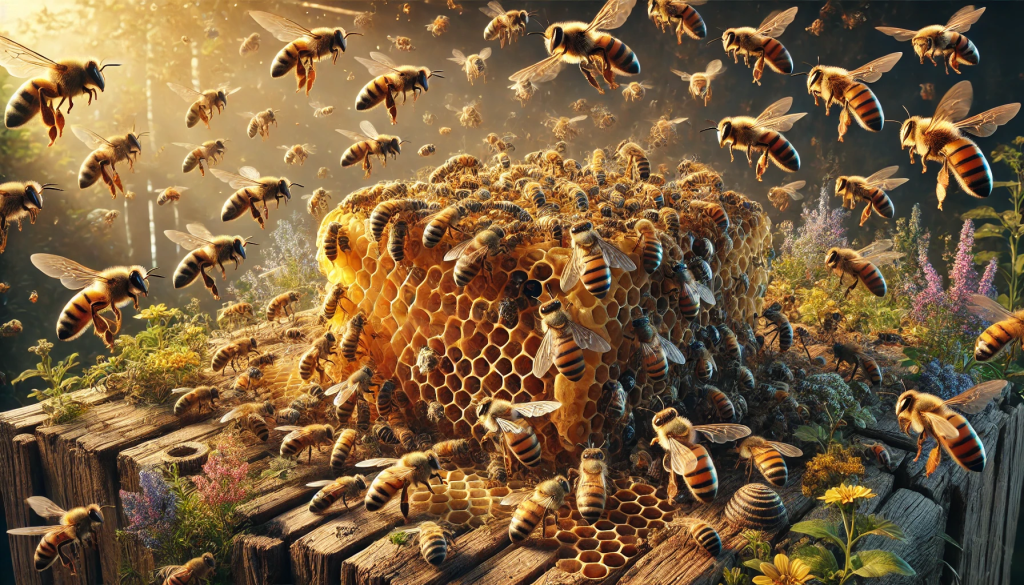
Honeybees live in organized colonies. There are three categories within each community: the queen bee, the drones, and the worker bees. A single colony has only one queen, who is female. There are several thousand male drones and tens of thousands of female worker bees.
The female bees are the backbone of the hive, as all worker bees and the queen are female. Male drones lack stingers and cannot produce honey. Their primary role is to mate with the queen and help regulate the hive’s temperature by flapping their wings.
Now, let us reflect on this aspect of bee life and its connection to our daily lives. Just as every bee contributes significantly to the hive, every family member plays a crucial role in ensuring the success of daily endeavors, guided by Allah’s commands.
The ultimate objective of a Muslim family is to attain the eternal paradise promised by Allah. This can be achieved when each family member fulfills their role, just as bees work together, paving the way for their desires in both this world and the hereafter.
Honey
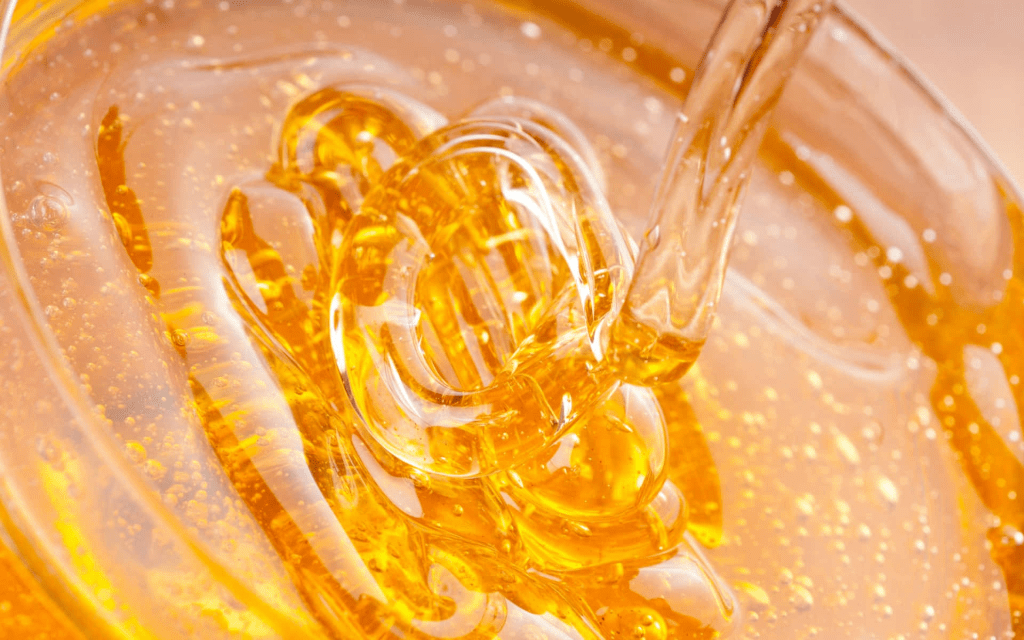
There are various types of honey, and it comes in different colors. The color of honey can range from light brown to darker shades or even a very light, almost white hue.
The next verse discusses the process of honey production, its properties, and its benefits:
“Then eat from all the fruits and follow the ways of your Lord laid down [for you].” From their bellies comes a drink, varying in colors, in which there is healing for people. Indeed, in that is a sign for a people who give thought.”
(Surah An-Nahl 16:69)
According to a clinical study presented in the paper “Honey and Health: A Review of Recent Clinical Research,” honey possesses antioxidant, anti-inflammatory, antibacterial, and wound-healing properties.
It is also worth noting that understanding how the flowers surrounding a hive influence the type of honey produced has only been possible with recent technological advancements.
Multiple Stomachs and Bee Gender

Bees have multiple stomachs within a single body. While collecting nectar, bees store it in a special area called the “Honey Stomach” before returning to their hive. Behind this stomach is a valve that prevents the nectar from spilling into the digestive system, except for a small amount necessary for survival.
In Arabic, the word “Butuniha” (بُطُونِهَا) means “its stomachs” and refers specifically to the female bee. Today, we know that honeybees have an additional stomach dedicated to honey storage.
If the term were used to refer to multiple female bees, it would have been “Butunihin” (بؤطؤنهين).
In Shakespeare’s play Henry the Fourth, there is a character who describes bees as soldiers under the command of a king. This is incorrect, as the evidence presented earlier shows that worker bees are female and serve only a queen bee.
Let us reflect once more on the greatness and miracles revealed to our Prophet Muhammad (peace be upon him).
How could an illiterate man who lived 1,400 years ago know that the bees producing honey are female, while the general public thought they were male?
How could an illiterate man who lived 1,400 years ago know that honeybees have an additional stomach?
| Linguistics | Astronomy | Biology | Entomology | Genetics | Oceanography | Geology | Physics |
References:
- Surah An-Nahl – 1-128 – Quran.com. (n.d.). Quran.com. https://quran.com/16?startingVerse=68
- BBC. (2016, June 28). Why do bees build hexagonal honeycombs? – Forces of Nature with Brian Cox: Episode 1 – BBC One [Video]. YouTube. https://www.youtube.com/watch?v=kxDEcODUEP0
- Gempe, T., Hasselmann, M., Schiøtt, M., Hause, G., Otte, M., & Beye, M. (2009). Sex determination in honeybees: two separate mechanisms induce and maintain the female pathway. PLoS Biology, 7(10), e1000222. https://doi.org/10.1371/journal.pbio.1000222




 Infiniti Islam
Leave a comment